


Surprising fact: the median pay for attorneys in 2025 is $151,160, while patent lawyers average about $248,256.
I start here to set clear rules for how I define top earners. I weigh medians, averages, and total compensation so you see a full picture.
In this piece, I preview top-earning specialties like patent and intellectual property, corporate, and tax. I explain why base salary is only part of the story.
Bonuses, equity, contingency fees, and profit sharing can push pay far beyond a listed salary. Market and state gaps matter too: D.C., New York, and California lead in pay.
I’ll use 2025 data to show ranges and practical steps for a smarter career move. Expect a clear, friendly look at where strong demand and specialized skills drive higher pay, and what trade-offs to expect.
Key Takeaways
- Median baseline: U.S. median pay is $151,160 for lawyers in 2025.
- Specialties with premium pay include patent, IP, corporate, and tax practice areas.
- Total compensation often beats base salary due to bonuses and equity.
- Location and firm size swing pay significantly across markets.
- I offer data-backed ranges and practical steps to boost your earnings trajectory.
How I define “highest paid” in the United States right now
My measure of “highest paid” looks past base figures to capture full financial outcomes. I focus on total compensation: base salary plus bonuses, profit sharing, contingency payouts, and equity. That gives a truer view of top-tier earnings in modern practice.
I use both medians and averages. Medians avoid distortion from a few huge checks. Averages show upside and help reveal a realistic range for specialties like patent, IP, corporate, and tax.
“Total pay tells the fuller story: a listed base is only one piece of a lawyer’s income.”
- Compensation scope: I rank by total pay, not base alone.
- Data measures: I weigh medians and averages to capture distribution.
- Geography & platform: Market size and firm client base shift outcomes sharply.
| Specialty | 2025 Avg ($) | Typical range ($) |
|---|---|---|
| Patent | 248,256 | 152,022–405,409 |
| Corporate | 207,306 | 122,878–349,745 |
| Trial | 120,815 | Varies by case |
I flag data issues across sources and triangulate numbers. I also consider risk, complexity, and specialization as key factors that drive pay. With this framework, you can read later sections and compare earnings and areas on the same scale.
The highest-paid types of lawyers today: a data-backed listicle
Below I break down which practice areas lead 2025 salary charts and what drives their upside.
Patent attorneys — highest average salaries reported in 2025
Patent attorneys top the lists with averages near $248,256 and ranges up to $405,409. They handle patents, trade secrets, and technical data for companies that prize market-edge inventions.
Intellectual property lawyers — lucrative across tech and entertainment
Intellectual property attorneys average roughly $231,099. Demand is strong in software, media, and licensing where IP protection and enforcement matter to startups and studios alike.
Corporate, tax, trial, and contingency-driven specialties
Corporate attorneys report averages near $207,306, driven by M&A, governance, and big-firm bonuses.
Tax attorneys average about $192,000, advising on complex codes and high-value planning.
Trial lawyers average roughly $120,815; strong verdicts and reputation can boost pay. Personal injury and medical malpractice work uses contingency fees that can produce major payouts when cases resolve favorably.
“Specialization, client mix, and case complexity explain why these fields lead in salaries.”
- Entertainment and sports: premium contracts and sponsorship deals.
- Personal injury: contingency alignment with case outcomes.
what type of lawyer makes the most money: key salary ranges and earning potential
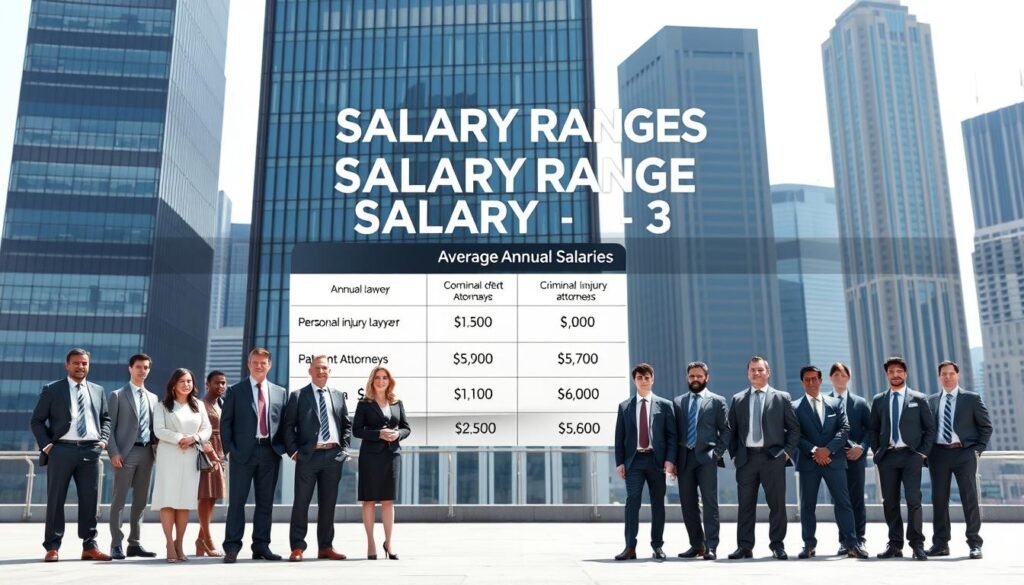
Let’s compare typical base pay against total compensation to reveal real earning power.
I separate base salary from upside so you can see practical earnings paths. Base figures show stability. Total compensation captures bonuses, profit sharing, and contingency payouts.
Typical ranges vary widely by specialty. Patent roles show a base range near $152,022–$405,409 with an average salary of $248,256. Corporate roles list bases from $122,878 to $349,745 and an average salary around $207,306.
IP averages near $231,099, tax about $192,000, and trial averages roughly $120,815. Location shifts these numbers: DC and NY report higher medians that push total earnings up.
How complexity, risk, and clients drive pay
Complex cases and high-value clients justify premium fees. Technical IP disputes, major M&A deals, and high-damage tort cases demand more prep and bring higher pay.
Client mix matters: Fortune 500 work favors retainer and bonus models. Contingency cases use asymmetric upside but carry higher risk.
| Specialty | Average salary ($) | Typical range ($) |
|---|---|---|
| Patent | 248,256 | 152,022–405,409 |
| Corporate | 207,306 | 122,878–349,745 |
| Trial | 120,815 | Varies by case |
Reminder: a career can blend base security with outcome-based bonuses to match your risk tolerance and earnings goals.
For broader context on top roles, see highest-paid career paths.
Where lawyers earn more: state and city impacts on salaries

I look at medians to show real market differences. The District of Columbia leads at $172,490, followed by New York $164,180, California $162,700, and Massachusetts $153,570.
Nominal pay can mislead. Higher salaries in big metros meet much higher housing and tax costs. That cuts into take-home pay for many individuals.how-to-make-money-through-phone
Top-paying markets and why they pay more
- Big clients — global companies and financial institutions — drive complex work and higher billing.
- Law firm platforms in these cities staff large teams that handle high-stakes matters.
- Proximity to courts and regulators in DC and major metros increases demand for niche practice areas.
| Area | Median ($) | Notes |
|---|---|---|
| District of Columbia | 172,490 | Regulatory and government-focused demand |
| New York | 164,180 | Finance and corporate deal flow |
| California | 162,700 | Tech, IP, and entertainment clients |
| Massachusetts | 153,570 | Life sciences and tech clusters |
“Location shapes opportunity; it also shapes costs and the kinds of matters you handle.”
Smaller markets can still reward specialization. If you build a niche practice, you may out-earn peers in higher-cost metros by keeping overhead low and commanding premium rates.How to learn more about how-much-money-is-it-to-make-a-coffee-shop
Factors that push attorney salaries higher

Compensation climbs when institutional clients, experience, and niche knowledge align. I track the forces that actually move salary windows, not just headline pay figures.
Firm size and Big Law leverage
Large law firm platforms raise ceilings. Big firms win marquee clients and set higher billable targets. That scale translates into bigger bonuses and partner profit pools.
School pedigree, experience, and track record
Top-ranked schools open recruiting pipelines, but sustained performance matters more. As your experience grows, your rates rise and origination credit follows. That history directly boosts long-term success.How to learn more 100-ways-to-make-money-as-a-kid
Specialization depth and demand in practice areas
Deep subject expertise in complex areas—IP litigation, M&A, medical malpractice—improves pricing power. Demand for technical knowledge lets attorneys charge premium fees.
- Business development and referrals smooth revenue and drive repeat clients.
- Thought leadership and technical writing increase perceived value and success.
- Firm economics link team wins to higher personal compensation via profit sharing.
| Driver | Impact on pay | Why it matters |
|---|---|---|
| Big Law platform | High ceiling | Access to institutional clients and large matters |
| Experience & track record | Progressive increases | Higher rates and origination credit |
| Specialization depth | Premium pricing | Complex knowledge commands fees |
“Clients pay for results and usable knowledge; skills beat credentials when it counts.”
How I’d pick a high-earning practice area without derailing my career

I want a path that pays well and fits my strengths. I start by listing abilities—technical aptitude, financial sense, strong writing, or persuasive advocacy—and I match those to market demand in IP, tax, corporate, and litigation.
Match skills to work style. If I enjoy deep research and precision, I lean toward tax or IP. If I prefer negotiation and deal rhythm, corporate wins. If I love live persuasion, litigation fits my energy.
Practical steps I follow
- I map my strengths to client needs in my city so I can build momentum instead of fighting the wrong market.
- I seek mentors and teams that expose me to premium matters early so my knowledge converts to higher rates.
- I plan credentials that matter: technical background for patent work, accounting fluency for tax, deal experience for corporate.
- I invest in business development—writing, speaking, networking—to grow a sustainable book of clients and long-term success.
| Practice area | Key strength | Credential to target |
|---|---|---|
| Patent / IP | Technical knowledge, precision | STEM degree, USPTO registration |
| Corporate / M&A | Deal craft, negotiation | Transactional experience, finance fluency |
| Tax / Compliance | Analytical research, code depth | LLM or tax certifications |
“Choosing a field is about fit and market signal — align both and you raise your odds of lasting success.”
Future trends reshaping high-paying legal fields
New tech and shifting rules are already changing who gets high-value matters and why.
Technology and AI: from eDiscovery to IP and data privacy
AI, automation, and analytics are moving routine tasks into tooling. eDiscovery, contract review, and legal research now run faster and at scale.How to learn more how-did-gatsby-make-his-money
That shift forces me to focus on strategy, judgment, and client-facing advice rather than repeat work.
At the same time, issues around data governance and property in digital assets make intellectual property and privacy work more complex and valuable.
Globalization and evolving regulations fueling demand
Cross-border deals and disputes add layers of regulation and multi-jurisdictional cases. That raises demand for counsel who can manage regulatory conflict and coordinate filings.
Regulatory change in environmental, healthcare, and digital security creates fresh issues that push clients to hire specialists.
“Lawyers who pair technical fluency with courtroom skill and regulatory knowledge will capture more high-value work.”
- I see tech-savvy litigators use modern tools to streamline cases and strengthen court presentation.
- Firms that embrace innovation attract complex matters and better margins.
- For my role, updating privacy frameworks and AI-assisted workflows is essential to stay competitive.
| Trend | Impact on practice | Why it matters |
|---|---|---|
| AI & automation | Fewer routine hours, more advisory work | Boosts earnings for strategic roles |
| Data privacy & property | New compliance lanes and disputes | Creates premium advisory demand |
| Cross-border regulation | Complex multi-jurisdictional cases | Value for lawyers who coordinate globally |
Actionable takeaway: I recommend continuous skill updates and niche fluency. For a practical look at emerging demand in law, see emerging areas in law.
Conclusion
I wrap up with the big picture: patent and intellectual property lead average pay, while corporate and tax offer steady upside. Trial and personal injury can produce outsized wins tied to case results.
Choose work that fits your skills and market. Experience, clear court strategy, and strong case execution compound over time and lift rates and reputation.
Compensation shifts by location and firm platform, so target markets where clients value your expertise. Invest in specialization, steady business development, and practical success stories.
Personal injury cases can be life-changing for individuals and for attorneys, but they demand patience, ethics, and risk tolerance. Watch evolving property and data issues for fresh demand.
Take one step this week: connect with a mentor, deepen a niche, or research a target firm. For a regional pay snapshot, see this Philippines pay guide.
FAQ
Which legal fields offer the highest earnings today?
I focus on roles that combine specialized knowledge, high client budgets, and rare skills. Patent attorneys, intellectual property lawyers, corporate attorneys handling M&A, tax specialists, top trial counsel, and elite personal injury or medical malpractice advocates often top earnings lists. Entertainment and sports counsel can also command premium fees when they represent major clients or negotiate big deals.how-does-tubi-make-money
How do I define “highest paid” in the United States right now?
I measure highest paid by total compensation — base salary plus bonuses, contingency fees, profit share, and partner draws. I look at data from law firm reports, government salary surveys, and industry publications to reflect current market pay in major legal hubs.
Which role reported the highest average salaries in 2025?
Patent attorneys frequently report the highest averages, driven by tech, biotech, and pharmaceutical demand. Their technical background and USPTO registration make them scarce and valuable to employers like Apple, Johnson & Johnson, and major patent boutiques.
Why do intellectual property specialists earn so much?
I see strong pay because IP lawyers protect high-value assets for tech, entertainment, and life sciences firms. They handle licensing, enforcement, and transactions that directly impact revenue, so companies pay top rates for proven expertise.
What makes corporate attorneys highly paid?
Corporate lawyers advising on mergers and acquisitions, governance, and complex transactions earn large fees through high-stakes deals and firm bonus structures. Big Law firms in New York and San Francisco often reward rainmakers and partners handsomely.
How do tax attorneys command premium compensation?
Tax specialists solve complex compliance and planning problems for corporations and wealthy individuals. Their advice can save millions in liability or unlock business value, so their hourly rates and retainers reflect that impact.
What drives big pay for trial lawyers?
Trial counsel secure outsized verdicts and settlements. Contingency arrangements or hourly-plus-success-fee models let top litigators capture significant upside when they win high-stakes commercial or class-action suits.
How do contingency fees affect earnings in personal injury and malpractice work?
I note that contingency structures create high earning potential when cases settle or verdicts are large. Successful trial lawyers and firms that handle catastrophic injury or complex medical malpractice can earn large percentages of multi-million-dollar recoveries.
Can entertainment and sports counsel reach top income tiers?
Yes. Agents and attorneys who negotiate major contracts, endorsements, and IP deals for celebrities and athletes can earn large commissions and retainers, especially in Los Angeles and New York markets.
What are typical base ranges versus total compensation upside?
Base salaries vary widely: associates at big firms may earn six-figure bases, while partners and rainmakers see base plus profit distributions. Total compensation can multiply through bonuses, contingency awards, and equity, sometimes reaching seven figures for top performers.
How do case complexity, risk, and client type influence pay?
Complex matters require more expertise and carry higher stakes. Corporate clients, tech firms, and high-net-worth individuals pay for certainty and outcomes, so lawyers serving them command higher rates and larger retainers.
Which U.S. cities pay the most for legal talent?
Washington, D.C., New York City, major California metros, and Boston typically offer top pay. Those markets have dense concentrations of corporate headquarters, federal agencies, and VC-backed companies that need sophisticated counsel.
How does cost of living affect take-home pay?
I always weigh salary against expenses. Higher nominal pay in places like San Francisco often offsets steep housing and taxes, but net disposable income can be higher in some lower-cost cities even with smaller salaries.
What firm characteristics boost compensation?
Large firms with national or international reach, known as Big Law, typically offer the biggest bases and bonus potential. Boutique firms can pay well too when they dominate a lucrative niche like patents or tax controversy.
How important are school pedigree and experience?
Prestige helps, especially for early career placement at top firms. Over time, client relationships, courtroom wins, and a track record of results matter more for partner-level earnings than alma mater alone.
How does deep specialization affect earning potential?
The more niche and in-demand the skillset — for example, AI-related IP, international tax planning, or FDA regulatory work — the higher the potential pay. Clients pay premiums for scarce, directly applicable expertise.
How should I pick a high-earning practice area without derailing my career?
I recommend matching strengths and interests to market demand. If I enjoy technology and have a STEM background, patent work fits. If I like high-pressure advocacy, litigation could suit me. Balance earnings with lifestyle and long-term satisfaction.
How will technology and AI reshape high-paying legal fields?
AI boosts efficiency in discovery and document review, but it also creates new legal work in data privacy, IP protection, and regulatory compliance. Lawyers who master these areas will see growing demand and pay.
What global trends will affect future demand for top legal specialties?
Cross-border deals, evolving financial rules, and international regulation push demand for tax, compliance, and corporate counsel. I expect lawyers with global experience and multilingual skills to gain a premium.