


46,000 new HVAC technicians will be needed by 2028 — that’s a surge I turned into steady income by treating demand like an asset, not a gamble.
I run my hvac operation with tight pricing, clear KPIs, and service agreements that smooth seasonal swings. This gives me weekly visibility into profit and cash rather than guesses.
I aim for 50–55% gross margin so net profit can hit 17–20%. That target changes everything. It frees budget for marketing, training, and parts while keeping customers happy.
My roadmap is simple: price for profit, track job costs, and build recurring revenue. I back decisions with field service software and a solid sales process so growth is repeatable.
Key Takeaways
- Demand growth creates a timely chance to capture high-value customers.
- Target 50–55% gross margin to support sustainable net profit.
- Use KPIs, job costing, and software for real-time financial visibility.
- Recurring agreements and bundled offers stabilize revenue across seasons.
- Local marketing and great service feed qualified leads at lower cost.
Set Profit Targets Like a Pro: The Margins I Aim For and How I Track Them
I reverse-engineer monthly revenue goals into daily metrics that the team can chase. That approach turns vague targets into clear actions and keeps me from guessing where profit will land.
My baseline: 50-55% gross margin to drive 17-20% net profit
I set a 50–55% gross margin target across services. Hit that and the math reliably produces a 17–20% net profit after expenses and overhead.
Why many firms stall at 2-3% net (and how I avoid it)
Many hvac companies and contractors end the year near break-even because they underprice jobs and lack real-time KPI visibility. I avoid that by pricing with job costing, tracking close rates, and enforcing departmental targets.
“Price for profit, measure daily, and reconcile monthly — that’s how owners remove surprises.”
The KPI snapshot I review daily, weekly, and monthly
Daily: calls in, jobs booked, revenue posted, and pacing vs. targets.
Weekly: booking conversion, average ticket, cancellations, and membership metrics.
Monthly: departmental rollups, reconciled revenue, expenses, and a meeting with my accountant.
- Dashboards replace spreadsheet chaos and speed decisions.
- I tie targets to incentives so the team sees a clear scoreboard.
- Quarterly reviews adjust for seasonality and shifts in revenue mix.
How to Make Money in Heating and Air Conditioning Business
I built a three-tier plan that turns raw data into predictable profit. It gives the whole company a clear line from targets to daily work.
My three-tier plan: assess, track, and optimize for profit
Tier 1 is assessment. I review revenue and gross margin by department—installation, service/repair, maintenance, and new construction—and set percentage goals for each.
Tier 2 is tracking. I monitor daily KPIs and monthly pacing so issues show up before they cost me profit. That pulse check is non-negotiable.
Tier 3 is optimization. Where KPIs flag leaks I fix dispatch, inventory, or first-time-fix rates. Documented processes and software turn fixes into repeatable gains.
Department views: installation, service/repair, maintenance, new construction
I measure gross profit at the department level and track net profit at the company level. Then I reverse-engineer lead needs from average ticket and close rates so the pipeline matches profit targets.
- Assess numbers by department.
- Track daily pulse checks, weekly syncs, monthly reviews.
- Optimize pricing, dispatch, and first-time fixes when margins slip.
“Benchmark against 50–55% gross margin and reset pricing or scope when a department falls below the line.”
This strategy keeps my hvac business owners and leaders focused on measurable growth and protects margin as we scale. For a deeper guide on the three‑tier plan, see my three‑tier plan.
Price for Profit: My HVAC Pricing Playbook That Protects Margins
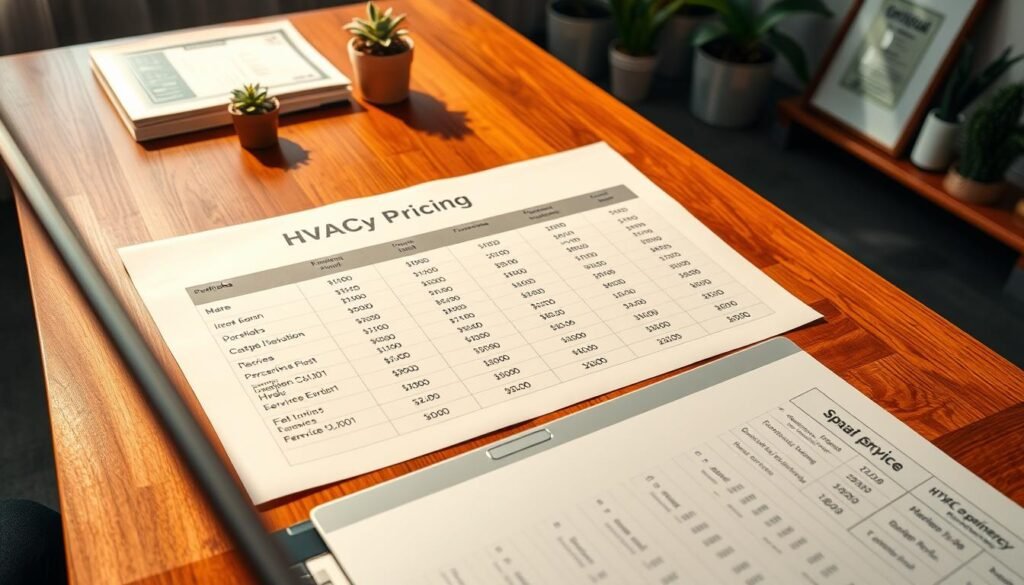
My pricing choices are the single biggest lever I pull when profit drifts off target. I build rules that keep margins steady while letting the team sell with confidence.
Flat-rate vs. time-and-materials
I use flat-rate pricing for repeatable, standard work because it speeds sales and builds trust. For complex or unpredictable scopes, I price on time-and-materials so I don’t underbid and lose profit.
Seasonal adjustments that capture demand
Peak season gets premium pricing to protect margin and manage load. In shoulder months I offer targeted discounts and payment options to keep cash flow steady without hurting long-term revenue.
Bundling and job costing discipline
Bundles lift average ticket value. I pair installations with accessories, extended warranty, and a maintenance plan so customers choose higher-value options. Job costing is a must: I track labor hours, parts, and allocated overhead per job and confirm each line clears my margin targets.
- Price book based on labor burden, materials, and overhead.
- I track profit per job and per tech to spot underperformers.
- I test promos with margin checks so activity still earns profit.
- Train techs to present good/better/best options that protect margin.
“Price for value, not just parts and hours.”
Win More of the Right Customers: Marketing That Pays for Itself
I focus my marketing on segments I can serve profitably. Residential replacements and indoor air quality work deliver higher tickets and repeat service. I avoid low-margin emergency patches that burn time and reduce margin.
The target market I focus on (and who I don’t chase)
I document ideal customer profiles and the types I won’t pursue. That discipline keeps crews productive and preserves margin.
Local SEO, reviews, and Google Business Profile that feed me leads
My local presence is tactical: a detailed Google Business Profile, service pages for neighborhoods, and up-to-date photos. Reviews matter — 86% of consumers weight recommendations heavily, so I ask on-site, by text, and by email.
“Fast booking, financing, and bundled maintenance beat a race to the bottom.”
| Channel | Goal | Metric |
|---|---|---|
| Google Business | Intent-driven discovery | Calls & direction requests |
| Local SEO pages | Rank for neighborhood searches | Organic leads & form fills |
| Review system | Build social proof | Referral rate & close% |
| Paid ads | Targeted promotions | Cost per lead & ticket |
- I track source, close rate, and average ticket so I can double down on channels that bring qualified customers.
- I highlight differentiators like online booking and financing to win potential customers on value.
- For playbooks and deeper tactics, I reference best practices in hvac marketing.
Sell on Every Call: How I Train HVAC Technicians to Drive Sales

Sales begin at the doorstep—what techs say and do in those first five minutes often decides the outcome. I train my team to build trust quickly by listening, explaining clearly, and showing respect.
Soft skills, trust, and tiered options that turn service into sales
I coach soft skills—listening, clarity, and empathy—so my technicians create rapport on every visit. That trust converts calls into long-term relationships.
Tiered options (good/better/best) are scripted and shown with photos and warranties. This gives a customer clear choices and raises average ticket without pressure.
Financing offers that remove sticker shock and raise close rates
I have techs introduce financing early, framing payments as simple monthly plans. Financing lifts close rates and turns large installs into manageable decisions.
High-profit accessories: IAQ, smart thermostats, and upgrades that add profit
I teach techs to spot upsell opportunities—smart thermostats, IAQ products, UV lights, and humidifiers. These items improve comfort and increase profit significantly.
“When we solve problems well, sales follow and profit grows.”
| Coach Focus | Behavior | Metric |
|---|---|---|
| Soft skills | Listen, clarify, show options | Conversion rate per tech |
| Financing | Introduce early, present payment plans | Average ticket & close% |
| Accessories | Recommend IAQ and smart controls | Attachment rate |
- I use call playback and ride-alongs for targeted coaching.
- I track conversion, accessory attachment, and callbacks per tech and reward growth.
- Customer outcomes come first; when we fix problems and explain options, sales and profit follow.
Operate Lean: Systems, Software, and Inventory That Cut Overhead

My ops run lean because I let field service software expose waste and enforce standards.
That single platform centralizes KPIs for revenue, booking, conversion, first‑time fix, and membership metrics. Owners and managers see trends at a glance and act fast.
The dashboards and reports I use to stay on pace toward profit targets
I run my operation on dashboards—sales, booking, conversion, average revenue per job, and membership numbers—so I stay on pace with targets.
- I use call playback and quality reports for CSR coaching and better booking rates.
- Exception reports flag overdue POs, unbilled jobs, and stalled estimates.
- Automated confirmations, estimates, invoices, and payments improve cash flow and cut admin time.
Scheduling, dispatch, and first-time fix tactics that save time and money
I schedule with the right tech, parts, and a suitable window to boost first‑time fix rates. Smart routing reduces windshield time so my team completes more work per day.
Inventory controls: min/max, reorders, and just-in-time to prevent stockouts
I tighten stock with min/max levels, reorder alerts, and cycle counts to avoid dead money on shelves. Standard install kits and truck stock by job type cut waste and protect margin.
“Monitor callback rates and warranty costs; they tell you where processes need fixing.”
Motivate and Keep a High-Performing Team: Incentives, Profit Sharing, and Culture
I treat incentives as the operating system that aligns daily actions with long-term growth goals. Clear rewards and a transparent culture turn ordinary work into predictable outcomes. That matters for customer satisfaction, margin, and retention.
Bonuses and SPIFFs tied to revenue, quality, and maintenance conversions
I tie bonuses and SPIFFs to the behaviors that drive results—revenue goals, quality scores, and maintenance contract conversions. Performance bonuses can include upsell rates and customer satisfaction metrics.
Simple, measurable rules keep payouts fair and let the team chase clear targets.
Profit sharing and transparent goals that build ownership mentality
I implement profit sharing with transparent targets so the crew thinks like owners. When payouts are visible and automated, trust rises and turnover drops.
Software like ShareWillow can automate plans, so distributions are timely and accurate and the owner can focus on growth.
Career paths, training, and recognition to retain top techs
I build career paths with certification support and leadership tracks so top performers see a future here. Replacing entry-level staff can cost 30–50% of salary, so retention protects profit.
- I invest in ongoing training because better skills mean higher customer scores and more revenue per visit.
- I recognize wins publicly and measure retention and engagement to spot risks early.
- I align goals across CSR, dispatch, service, and install so teamwork rises and friction falls.
“When the team feels ownership and sees a clear path, growth accelerates and customer experience improves.”
As business owners and owners of small operations, hvac business owners who prioritize incentives, clarity, and coaching create resilient teams. That combination keeps my company profitable and ready for sustained growth. For builders seeking operational playbooks, see building a successful HVAC business.
Make Revenue Predictable: Maintenance Agreements and Recurring Services
I design membership plans that convert one-off calls into predictable monthly revenue. Maintenance agreements stabilize cash flow and often deliver higher margins than stand-alone repairs. That steady base lets my company plan staffing, parts, and marketing without guesswork.
Designing tiered plans customers love and my company profits from
I offer three clear tiers: basic inspection, plus with select repairs, and premium comprehensive coverage. Each tier includes priority scheduling, member discounts, and a documented inspection report so customers see real value.
I price plans to protect margin and create an upgrade path. Techs present options on-site with short scripts that make saying yes easy.
Renewals, automated follow-ups, and referral rewards that compound growth
I automate renewals, reminders, and seasonal touchpoints so agreements stay active and my schedule stays full year-round. Referral rewards turn satisfied members into a steady source of qualified leads.
| Metric | Why it matters | Target |
|---|---|---|
| Membership count | Forecasts recurring revenue | Monthly growth |
| Attachment rate | Shows upgrade success | 30%+ |
| Renewal rate | Stabilizes cash flow | 80%+ |
- I track membership count, attachment, and renewal rates on dashboards to forecast revenue and staffing needs.
- I use member touchpoints to spot replacement opportunities early and smooth seasonal demand.
- Consistent communication—tips, tune-up reminders, and exclusive offers—boosts retention and long-term growth.
“Treat maintenance as the backbone of predictable revenue and healthy cash flow.”
Conclusion
I wrap the playbook with one clear demand: set bold margin targets, price for profit, and measure daily so choices are data driven. That discipline turns seasonal peaks into steady revenue and makes scaling repeatable.
I double down on strategy that compounds: membership plans, local marketing, and team incentives that align with results. I keep operations lean with software, disciplined scheduling, and strict inventory controls so every job protects margin.
Pick one element and act this week. Train a tech on sales scripts, update a price book, or launch a Google Business update. Small steps build sustainable growth for an hvac company and the people who run it.
FAQ
What profit margins should I target for a healthy HVAC company?
I aim for a 50–55% gross margin that supports a 17–20% net profit. That range gives room for reinvestment, payroll, and unexpected costs while keeping cash flow positive.
Why do some HVAC companies only reach 2–3% net profit, and how do I avoid that?
Many owners miss disciplined job costing, let overhead creep, and underprice service work. I avoid that by tracking labor, materials, and overhead per job, enforcing pricing rules, and cutting unnecessary expenses quickly.
Which KPIs do I review and how often?
I check daily dispatch and lead volume, weekly revenue per tech and close rate, and monthly gross margin, net profit, churn, and average ticket. Those snapshots show where to adjust staff, pricing, or marketing.
What’s my three-tier plan for profitable operations?
I assess performance, track costs and revenue, and optimize processes. Assessment finds weak spots; tracking gives data; optimization raises margins across installations, service, and maintenance.
How should I view department performance?
I separate installation, service/repair, maintenance, and new construction. Each has different margins and cash cycles, so I treat them as distinct P&L contributors and staff accordingly.
When do I use flat-rate pricing versus time-and-materials?
I use flat-rate for common diagnostics and repeatable repairs to increase efficiency and predictability. Time-and-materials fits unique jobs or major retrofits where scope varies and risk is higher.
How do I adjust pricing seasonally without losing customers?
I raise prices modestly during peak demand, communicate value, and offer off-peak discounts or bundles. That keeps techs busy year-round and smooths cash flow.
What bundling strategies lift average ticket value?
I offer maintenance plans bundled with priority service, filter subscriptions, and IAQ add-ons. Bundles increase lifetime value and make upgrades feel like a smart, consolidated buy.
How strict should job costing be?
Extremely. I calculate labor hours, parts, and apportioned overhead before quoting. That discipline prevents margin erosion and shows which jobs to chase or decline.
Which customers do I target and which do I avoid?
I pursue homeowners and property managers who value reliability and will pay for quality. I avoid low-margin bargain shoppers and projects with unclear scopes or excessive change orders.
What marketing channels deliver the best leads?
Local SEO, positive reviews, a well-managed Google Business Profile, and targeted paid search deliver steady, high-intent leads for service and maintenance.
How do I train techs to sell without being pushy?
I teach soft skills, consultative language, and tiered options. Techs present clear choices: necessary fix, recommended upgrade, and premium option. That builds trust and increases close rates.
Do financing offers actually improve conversions?
Yes. I provide third-party financing and clear payment plans to ease sticker shock. Financing raises average ticket and helps customers choose higher-margin equipment.
What accessories offer the highest profit uplift?
Indoor air quality products, smart thermostats, UV lights, and premium filters have strong margins and recurring maintenance opportunities.
Which systems and software cut overhead most effectively?
I use dispatch software with GPS and route optimization, integrated CRM for follow-ups, and cloud accounting that links job costing to invoices. Automation reduces admin and increases billable time.
How do I improve first-time fix rates?
I standardize pre-visit checklists, stock common parts, and train techs on diagnostics. Higher first-time fixes reduce repeat trips and boost customer satisfaction.
What inventory controls protect margins?
I use min/max levels, scheduled reorders, and selective just-in-time stocking for expensive parts. That prevents both stockouts and excess carrying costs.
How do I structure incentives that actually motivate techs?
I combine bonuses for revenue with quality KPIs like call-backs and maintenance sign-ups. SPIFFs for specific upgrades work short-term, while profit-sharing builds long-term ownership.
How can profit sharing improve retention?
Transparent goals and shared upside make technicians feel invested. I share simplified monthly metrics and tie payouts to company performance so everyone benefits when margins rise.
What career paths keep top HVAC techs from leaving?
I offer training, certification sponsorship, clear pay tiers, and leadership tracks. Recognition and predictable raises matter as much as cash incentives.
How do maintenance agreements create predictable revenue?
Tiered plans with scheduled visits, discounted emergency service, and priority response lock in recurring payments and steady cash flow. They also increase lifetime customer value.
What renewal and referral tactics compound growth?
Automated renewal reminders, easy online payment, and referral rewards for both referrer and referee keep customers engaged and feed the pipeline without heavy ad spend.