

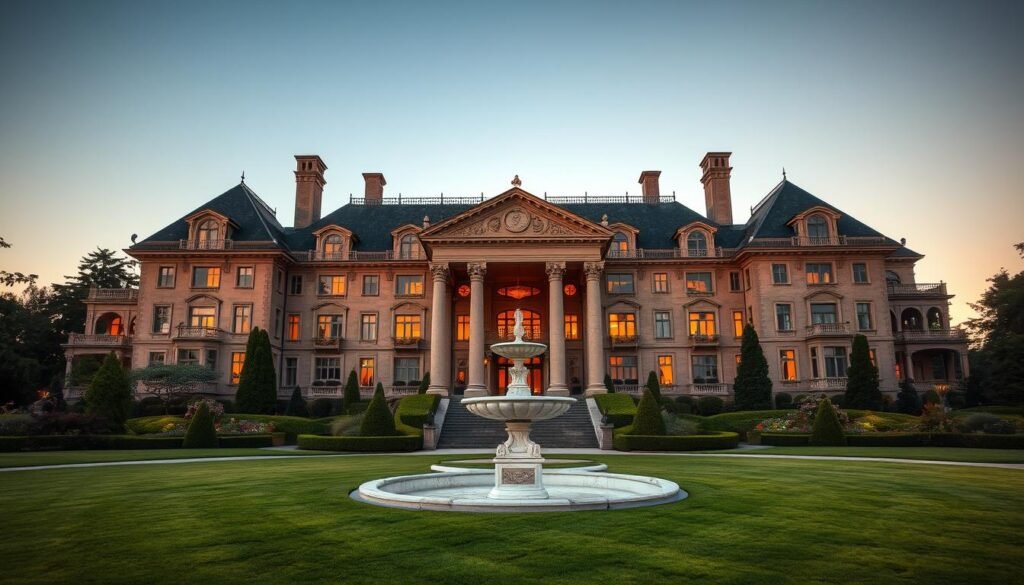
Nearly 1,000 guests poured through a Long Island gate on a single summer night, and most left never learning the truth behind the man’s fortune.
I set out to unpack that mystery in the Great Gatsby, tracing Jay Gatsby from James Gatz in North Dakota to the West Egg mansion where parties became a kind of currency.
My guide mixes story and ledger: Prohibition-era bootlegging, Dan Cody’s thwarted $25,000 bequest, and spending estimates that show a lavish surface and a fragile cash flow beneath.
Along the way I link concrete details to themes of class and the American Dream in New York, so the past reads like a financial map rather than mere lore.
For a deeper reconstruction of income and expense, see a focused analysis at Gatsby’s finances explained.
Key Takeaways
- I explain who Jay Gatsby was and why his name and past matter to the novel.
- The likely sources of wealth include bootlegging and Dan Cody’s influence.
- Gatsby’s parties and house were strategic tools to win Daisy, not just décor.
- Spending patterns suggest wealth that may have been unstable despite big displays.
- The story links personal reinvention to broader questions about the American Dream.
Why I’m Exploring Gatsby’s Money Story Today
I examine the finance of the story to see why wealth shapes every choice in the Great Gatsby. This book blends glamour and critique, and I want to show why the novel’s figures matter to the plot and to the people inside it.
F. Scott Fitzgerald admired and resented the rich at once. That tension gives the author a sharper view of leisure class life and turns a financial backdrop into character study.
My aim is plain: I will translate spending, earnings, and timelines into concrete benchmarks. That way the story’s risks and images make sense without losing the human stakes.
- I explain why the novel still speaks to readers about status and identity.
- I show why concrete numbers help track cause and effect in the plot.
- I connect Fitzgerald’s stance on wealth to the character’s decisions.
“He saw himself as a man who could change his life through image and expense.”
| Theme | Financial Lens | Impact on Story |
|---|---|---|
| Reinvention | Invested image, large purchases | Motivates key choices |
| Excess | Parties, cars, staff costs | Creates fleeting influence |
| Class | Old vs. new wealth | Drives conflict in New York society |
From James Gatz to Jay Gatsby: The Origins of a Fortune
I trace the first reinventions that turned James Gatz into a name people would notice in New York.
Born around 1890 to an impoverished Lutheran family on the Dakota plains, he found small-town life intolerable. Two weeks at St. Olaf confirmed his restlessness; he left and began to invent a different life.
At 17, a meeting with Dan Cody on Lake Superior changed the course of those years. The yacht apprenticeship gave him manners, tastes, and a vision. Cody’s promised $25,000 never reached him, but the denial became fuel.
The new name—a crafted brand—was practical as well as romantic. After war service and a brief Oxford stay, he returned to new york with a mission: earn enough to reclaim lost love and secure a place among the elite.
In my reading, Scott Fitzgerald uses this past to embody the american dream: self-creation backed by capital. That origin story explains why image, alliances, and risk-taking underlie the later pursuit of fortune.
Dan Cody’s Role in Gatsby’s Rise
A single chance meeting on Lake Superior rewired James Gatz’s ambitions and set a new plan in motion.
At 17 he warned tycoon Dan Cody about a storm. Cody took him aboard the Tuolomee and kept him for five formative years.
I see those years as an on-the-job school. Cody offered practical help and a living model of wealth. Jay Gatsby learned staff oversight, travel logistics, and the optics of high life.
The yacht encounter and five formative years
Those cruises exposed a rural boy to world travel and luxury. The tuition was informal but exacting: manners, contacts, and the mechanics of keeping a household.
The $25,000 inheritance that never came—and what it sparked
When Cody died, a bequest of $25,000 was willed but blocked by Ella Kaye. That loss sharpened Gatsby’s resolve.
“I learned from him that a name and a posture can open doors.”
| Aspect | What Cody Provided | Impact on Jay |
|---|---|---|
| Mentorship | Practical guidance, travel | Faster refinement of a persona |
| Operational skills | Household and staff roles | Run a household like a fortune |
| Financial lesson | Promise of inheritance | Drive to earn, not rely on luck |
In my reading, Scott Fitzgerald uses this episode to seed the great gatsby’s central tensions. Cody becomes both model and warning, shaping the character and the name that would matter in New York.
How Prohibition Opened the Door in New York
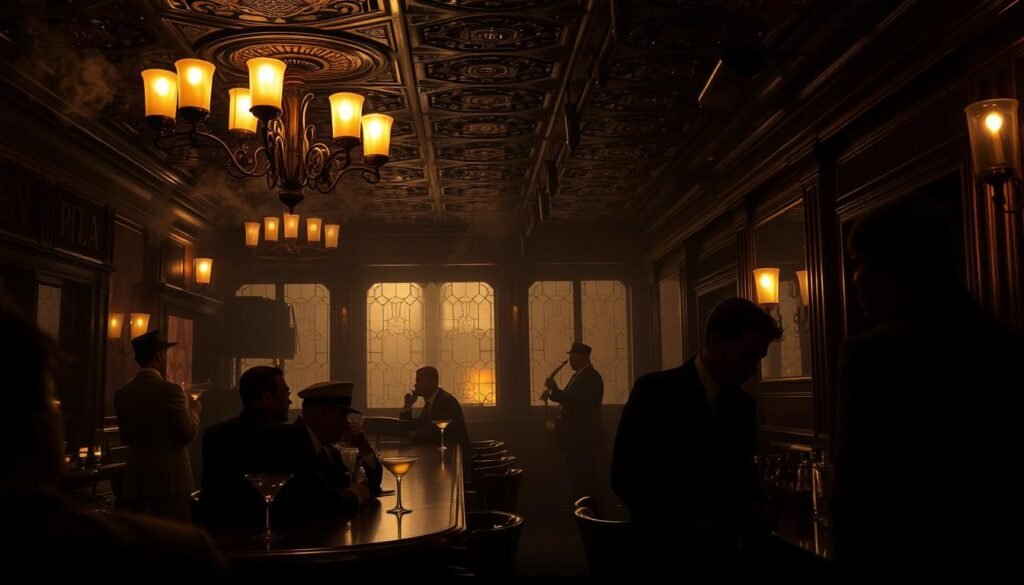
The legal ban on spirits in 1920 pushed demand underground and changed business in New York almost overnight.
The Volstead Act created black markets across the united states. I note that this law turned common thirst into a commercial opportunity and a legal risk at the same time.
The Volstead Act, black markets, and the birth of a bootlegger
Demand for alcohol exploded, and supply moved into side streets and concealed shops. In the Great Gatsby, an image of pharmacies selling liquor makes operational sense in the 1920s.
Drug-store liquor sales and distribution in the Roaring Twenties
Pharmacies and small outlets offered a neat cover story. Bootlegging margins were tight after bribes and protection fees. Famous figures later earned large sums, but early operators rarely reached those peaks.
| Channel | Typical earnings (early 1920s) | Main risk |
|---|---|---|
| Drug-store front | Modest, regular | Raids, seizure |
| Local distribution | Variable | Bribes, theft |
| Organized networks | Higher at peak | Violence, legal crackdowns |
“Prohibition turned reputation and access into a form of capital.”
I argue this context matters for understanding Gatsby’s rapid rise. New york’s social web made access as valuable as cash, and the dream could cost more than it bought. For broader cultural effects, see the unintended consequences of Prohibition.
how did gatsby make his money: Bootlegging and Organized Crime Ties
The novel points to a shadow economy that let Jay Gatsby buy a life he never earned by ordinary means.
I map the links between Gatsby and Meyer Wolfsheim to show proximity to organized crime in New York. Wolfsheim’s presence signals ties to gamblers and fixers, including the infamous 1919 World Series rumor.
Meyer Wolfsheim’s shadow and alleged World Series fixer
Wolfsheim is shorthand for influence. His name hints that Gatsby’s network moved beyond simple supply and into buried alliances.
Bribes, protection, and the real margins of illegal alcohol
Bribes and protection were built into costs. Lawyers, kickbacks, and safe transport cut into every sale. That reality shrank headline profits.
“Reputation and connections were currency.”
- Networks, not lone operators, moved product and influence.
- Liquidity mattered: cash kept product flowing and people quiet.
- Image masked the day-to-day costs and risks.
| Cost Factor | Typical 1920s Expense | Impact on Margin |
|---|---|---|
| Bribes | Frequent payoffs to police | Reduced net by 10–25% |
| Lawyers | Defenses and loopholes | Fixed retainers, steady drain |
| Transport | Vehicles, boats, fuel | Variable, increased with scale |
| Protection fees | Payments to networks | Essential, but costly |
The Numbers Behind the Myth: What Gatsby Likely Earned
I put numbers to rumor and spectacle to see what the ledger behind the legend might show.
Early-1920s benchmark earnings versus famous bootleggers
I compare plausible receipts to known figures from the 1920s in the Great Gatsby world and the wider United States.
Estimates suggest Jay Gatsby may have netted around $1 million from bootlegging by mid-1922. A side venture in bonds could add roughly $100,000 per year.
Early operators faced low margins after bribes and protection. That compressed profits in the first few years.
Side ventures hinted in the bond business
A bond stream would explain steady inflows while illegal trade ramped up over several months. Cash ops avoided banks but raised security risks.
“Fast fortunes bought image, but costs and payouts often left less than the spectacle implied.”
- I benchmark a plausible $1–1.25 million over a couple of years against later peaks.
- I note organized crime expenses that cut margins and add volatility.
- I stress that this income supports the narrative tension between spending and saving.
| Subject | Estimated Net (mid-1922) | Notes |
|---|---|---|
| Jay Gatsby (estimate) | $1,000,000 | Bootlegging primary; bonds ~ $100k/yr side stream |
| Early US bootlegger (typical) | $200,000–$600,000 | Lower margins due to bribes and start-up months |
| Notorious figures (Capone/O’Banion) | $1,000,000+ (later peaks) | Higher scale and entrenched networks |
| Bond/legit side venture | $100,000/yr | Smoothed cash flow, reduced exposure |
What the West Egg Mansion Really Cost
The West Egg house was less a private refuge than a public statement. I read it as a purchase that bought proximity to East Egg style while forcing constant payments and exposure.
Using a Kings Point analogue, a 2010 price of $29.5M converts to roughly $2.7M in 1920 dollars. Conservatively, I peg a 1922 sale near $2M.
Buying in nouveau-rich West Egg versus old-money East Egg
West Egg gave access to Long Island society without old pedigree. That choice favored visibility over acceptance. It fit the aims in the Great Gatsby and the social critique of Scott Fitzgerald.
Down payment, short loans, and monthly strain
Loans then rarely exceeded 50% of value and often carried 3–5 year terms at about 5%. With a 50% down payment on $2M and a short maturity, monthly obligations approach $23,000.
- Big down payment drained liquidity immediately.
- Short-term loan maturity demanded steady receipts across months.
- The house doubled as a stage for every party and spectacle.
“The mansion was a linchpin expense: a symbol and a bill that magnified every other choice.”
For Jay Gatsby the house anchored his brand in New York and made cash flow a daily concern. Illegal income could fund drama, but the debt schedule turned glamour into a recurring burden.
Inside the Parties: Lifestyle Spending That Outpaced Income
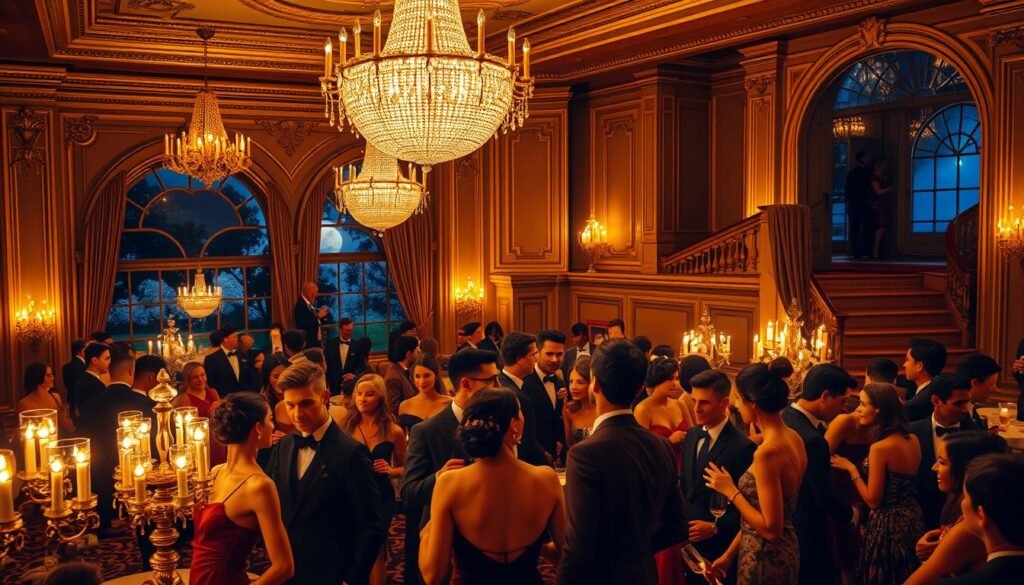
The parties at the West Egg house were less entertainment than a sustained advertising campaign. I see every detail as a deliberate spend to create reputation and reach Daisy.
Orchestras, champagne, and two suppers a night
A typical party in 1922 cost about $11,000. That covered a full orchestra, singers, two suppers, a stocked bar pouring alcohol, crates of fruit, décor, and a large staff to run the night.
Fifteen summer weekends of spectacle—and the bill
Across roughly 15 weekends, those events pushed totals near $165,000 in 1922 dollars. Add staffing, deliveries, and New York logistics and the seasonal burn rose sharply.
Rolls-Royce, motor-boats, imported shirts, and staff
The visibility items mattered. The yellow Rolls-Royce cost about $15,000, two motor-boats roughly $10,000, wardrobes about $2,000, and misc. outlays near $25,000. Eight servants and a chauffeur meant payroll ran continuously.
“The party was the marketing plan; it bought attention, not profit.”
| Item | Type | Estimated 1922 Cost |
|---|---|---|
| Single party (orchestra, food, drinks) | Recurring | $11,000 |
| Season total (15 weekends) | Recurring | $165,000 |
| Yellow Rolls-Royce | One-time | $15,000 |
| Two motor-boats | One-time | $10,000 |
| Wardrobe & misc. | One-time/periodic | $27,000 |
| Monthly mortgage (season) | Recurring | $20,000+ |
- I link the house and parties: upkeep and staff costs continued even after guests left.
- Logistics in new york—guest transport, deliveries, security—added steady expense.
- I argue that gatsby would prioritize these spends because the party was the route to Daisy.
In short: the lifestyle funded the myth but drained liquidity. The great gatsby spectacle bought attention and left little room for shocks to supply or protection flows.
Was Gatsby Truly Wealthy—or Just Cash-Flow Rich?
Numbers tell one story; cash flow tells another, and Gatsby’s case favors the latter. I weigh his reported wealth against regular obligations and find a fragile balance.
Living beyond means in the 1920s credit culture
By mid-1922 his receipts may have reached roughly $1.25M, yet upfront costs—about $1M down plus $161,000 in monthly payments—ate liquidity fast.
The 1920s normalized easy credit and conspicuous consumption. Scott Fitzgerald knew this world, and the novel places that pressure squarely on one man.
Why debt and liquidity risks shadowed the fortune
Short-term loans and rolling obligations can mimic solvency until a shipment stalls or a partner vanishes. For an illegal operation, that risk multiplies.
I argue the lifestyle—parties (~$165,000), cars and boats (~$52,000), plus ongoing payroll—kept Gatsby on a treadmill. People often read spectacle as security, but the ledger shows a different truth.
“Apparent abundance masked daily strain and constant exposure to interruption.”
- I weigh wealth against obligations and find he looked liquid but lived close to the edge.
- Debt-like structures can hide vulnerability until they break.
- The american dream here becomes consumption that must be endlessly refueled.
| Item | Estimated Amount (1922) | Impact |
|---|---|---|
| Estimated income | $1,250,000 | Large on paper, variable in cash flow |
| Upfront obligations | $1,000,000 down + $161,000/month | Severe drain on liquidity |
| Seasonal lifestyle costs | $217,000 (parties + assets) | Recurring pressure; requires steady inflows |
In short, the great gatsby frames a man who achieved surface success but depended on constant inflows to sustain a lifestyle. I read that fragility as central to the character and to the cautionary edge of the american dream.
Love, Status, and the Cost of Chasing Daisy
Every purchase at West Egg reads like a romantic offer folded into a banknote. I see the mansion, the cars, and the endless parties as payments toward a reunion with Daisy Buchanan.
Gatsby fell for Daisy in 1917, then returned to find she had married Tom Buchanan. That loss turned affection into a plan.
I argue that love explains every major outlay. The man equated fortune and worthiness because Daisy’s world measured status by displays of wealth.
The dream of reunion became the budget. Costs that a cooler head would cut became mandatory proof of superiority over Tom Buchanan.
“Love and status are inseparable currencies, and he pays in money he can’t spare.”
- I link romantic motive to mansion, parties, and public gestures.
- I show Tom’s presence raised the financial bar and forced performance.
- I note that each gesture in the novel carries a dollar figure and a risk.
In my reading, the result is tragic: devotion disguised as confidence, and a life priced wrong by passion rather than prudence.
Nick Carraway, Tom Buchanan, and What They Reveal About Money
From my window beside the West Egg house, I learned to read wealth as a social signal more than a ledger. Nick Carraway narrates the scene: a Yale graduate and bond salesman living modestly next door. His position makes him a useful character for judging excess in new york.
Nick’s lens on West Egg excess
Nick admires the hope he sees in a nearby man, yet he is uneasy about the means. As narrator, he filters what feels justified and what feels gaudy.
Tom’s attacks and the weight of pedigree
Tom Buchanan labels the outsider as a threat and a fraud. His barbs expose entrenched hierarchies and a family-backed view of status.
“He called him ‘Mr. Nobody from Nowhere’ — an attempt to erase a person by origin and rumor.”
- I show that whispers about Meyer Wolfsheim tie reputation to alleged crime.
- The author gives us admiration and skepticism in the same voice, shaping our reading.
- In this book, who you are or what your family says you are matters as much as what you own.
These two viewpoints make money a social language, not just math. That dual lens helps the novel hold two truths: the hope is beautiful, and the operations are suspect.
The American Dream and the Outsider: What Gatsby’s Wealth Signifies
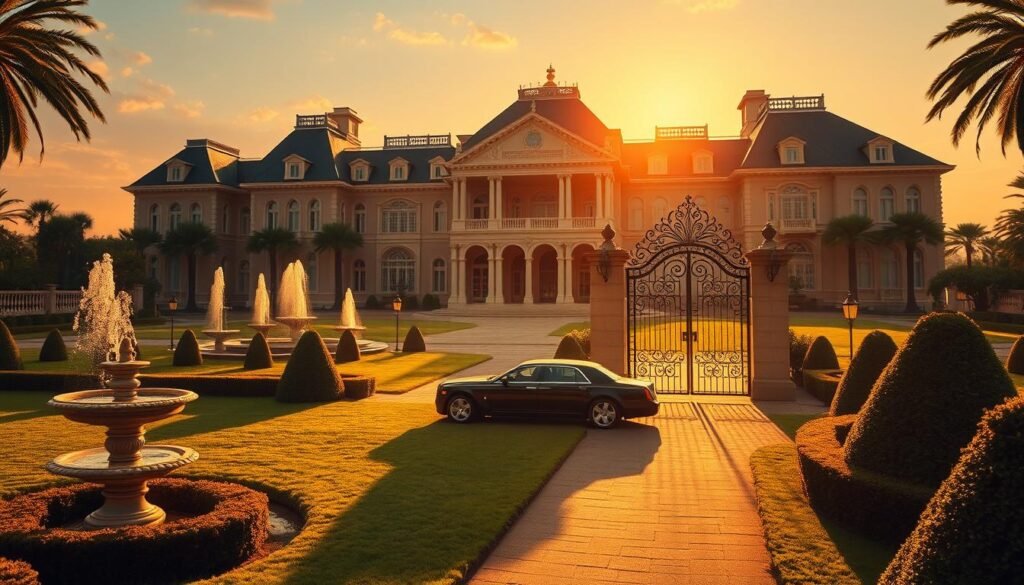
I read Gatsby’s rise as a modern parable about aspiration and the cost of visibility. The story uses a single man to dramatize what the american dream promises and what it hides.
Green lights, social mobility, and unattainable ideals
The green light at the end of Daisy’s dock stands for a dream that always seems within reach and always slips away. Scholars call it a symbol of yearning—an aim that drives the character forward even when the path is impossible.
I argue the light is less about success than about desire: it funds action, not safety. That tension makes the novel a cautionary tale about chasing a horizon that recedes as you close in.
Nouveau riche anxiety, class prejudice, and “latest America”
In the 1920s the rise of new wealth unsettled old lines. Fitzgerald considered calling the book Trimalchio in West Egg to underline the threat posed by an upstart class.
People project fears and wishes onto outsiders; those projections shape how elites respond. The result is social policing: sympathy mixes with suspicion, and the newcomer becomes a mirror for collective anxieties.
“The green light is not just longing; it reveals a culture that confuses image for belonging.”
- I show the american dream as mobility that keeps receding.
- Symbolism turns a money story into a cultural mirror of the roaring twenties.
- Fitzgerald casts the protagonist as the “latest America,” which unsettles established order.
Read today, the passage still matters. The novel’s analysis warns that a dream built on spectacle and borrowed credit can collapse when its holder falls. For a close reading of this theme, see an accessible essay on the novel’s treatment of the american dream at The Great Gatsby and the American.
What Happened to Gatsby’s Money After His Death?
What happens to a fortune when its owner leaves no clear record is a question Fitzgerald leaves deliberately unfinished.
After the shooting, only a handful travel to the funeral on Long Island: Nick, Owl-Eyes, and Henry C. Gatz. That small turnout underlines how thin the social ties had become.
The text gives no formal probate scene. Family logic suggests Henry C. Gatz might inherit, since Jay had once bought a house for his father years earlier. That purchase shows a financial link between them.
At the same time, I note that steady obligations and short-term debts could have consumed whatever remained. In the messy legal world of New York, murky earnings complicate estates, especially when records are thin.
“The lack of closure about assets mirrors the larger uncertainty about identity.”
- I argue the author keeps specifics vague to stress image versus substance.
- The sparse funeral on Long Island reinforces the story’s melancholy coda.
- Practically, creditors or loans on the house might eclipse any bequest to family.
Conclusion
My reading closes on a simple fact: spectacle can hide a brittle balance sheet. In the Great Gatsby the reported $1.25M by summer 1922 met big outflows—mansion down payments, parties, cars, and wardrobe—so liquidity stayed thin.
The novel sets that life on Long Island and in New York as a campaign for love. Nick Carraway narrates a man who spends to win Daisy Buchanan, and Scott Fitzgerald frames the scene as a 1920s critique of excess and the American Dream.
In short: a famous name became a brand built on bootlegging and image, not safety. I argue the book endures because the story maps income, outflows, risk, and the cost of chasing a dream.
FAQ
The Secrets Behind Gatsby’s Wealth — what was the core of his fortune?
I trace the fortune to a mix of reinvention, a mentor’s influence, and illicit opportunity in 1920s New York. After leaving North Dakota, James Gatz became Jay Gatsby, learned manners and direction from Dan Cody, then exploited Prohibition-era demand for alcohol. I see bootlegging and ties to shady operators as the most plausible revenue sources that funded his mansion and lavish lifestyle.
Why I’m Exploring Gatsby’s Money Story Today?
I examine the finances to unpack the novel’s themes: ambition, class, and the American Dream. Money in this story is more than cash — it reveals identity, desire, and the costs of social climbing. By following Gatsby’s wealth, I can explain how social status and illegal enterprise shaped his life.
From James Gatz to Jay Gatsby: How did reinvention create a fortune?
I note that changing his name and persona let him pursue wealth without baggage. His hunger to remake himself led him to seek wealthy patrons and risky opportunities in the city. Reinvention opened doors to elite circles and to jobs that paid well—or paid in ways beyond legal wages.
What did Dan Cody contribute to Gatsby’s rise?
Cody gave Gatsby exposure to luxury, seafaring travel, and the habits of rich men. Those five years aboard Cody’s yacht taught him manners and the allure of wealth. Although the promised ,000 never arrived, the experience sparked Gatsby’s ambition and provided patterns he later tried to replicate.
The ,000 inheritance never came—why did that matter?
I think the lost inheritance mattered psychologically and practically. Cody’s death denied Gatsby easy capital, forcing him to pursue other routes. That loss pushed him toward riskier ventures and intensified his determination to win wealth—and Daisy’s attention—on his own terms.
How did Prohibition open opportunities in New York?
Prohibition created huge demand for illegal liquor. I see the Volstead Act as a spur to black markets where ambitious operators could earn far more than in legal trades. Gatsby’s location near New York and Long Island put him close to distribution channels and wealthy customers who could pay premium prices.
What role did drugstore sales and distribution play in making money?
Some bootleg operations used legitimate fronts like pharmacies or import businesses to move alcohol. I find it plausible Gatsby financed networks using such covers—small retail outlets or transportation routes that disguised larger shipments headed for Manhattan speakeasies and private parties.
Was bootlegging and organized crime the main source of wealth?
I argue it was central. Gatsby’s links to figures like Meyer Wolfsheim, who’s implied to have fixed the 1919 World Series, suggest organized crime connections. Those ties offered access to supply, protection, and distribution—essentials for large-scale illegal profit in the Roaring Twenties.
Who was Meyer Wolfsheim and why does he matter to the money story?
Wolfsheim is presented as a fixer and gambler with criminal reach. I view him as the likely intermediary who helped Gatsby move product and launder proceeds. His presence in the novel hints that Gatsby’s enterprise had partners with clout in New York’s underworld.
What kinds of corrupt practices boosted profits—bribes, protection, margins?
I find evidence that bribes to law enforcement, payment for protection, and cutting deals with corrupt officials or rival gangs were common. Those costs lowered risk and let operators charge higher retail prices, increasing profit margins on illicit alcohol.
What would Gatsby’s likely earnings look like in numbers?
Estimating relative to 1920s benchmarks, successful bootleggers could clear far more than typical wages. I suggest Gatsby’s income fluctuated, with peak months funding parties and purchases but long stretches of thin liquidity. That pattern explains lavish short-term spending and underlying instability.
Were there side ventures beyond liquor hinted in the novel?
Yes. Gatsby references investments and a bond business, implying attempts to legitimize cash flow. I read these as either cover operations or real ventures that helped move or shelter funds acquired on the margins of legality.
What did the West Egg mansion cost him compared to East Egg elites?
Buying in West Egg placed Gatsby near Long Island’s wealthy but outside “old money” circles. I estimate large down payments, short-term loans, and constant maintenance expenses made the estate both symbol and financial burden—more show than secure asset when credit tightened.
How did Gatsby’s parties drain his resources?
I count orchestras, imported champagne, elaborate food, staff, and guest entertainments as major recurring expenses. Those spectacles burned cash quickly—pleasant illusions that required steady, high-margin income to sustain them over seasons.
Did Gatsby live beyond his means or was he truly wealthy?
I believe he was cash-flow rich but asset-poor. He had substantial income streams but likely lacked a stable capital base. That made him vulnerable: when social pressure or legal risk rose, his financial footing may have been weaker than appearances suggested.
How did chasing Daisy affect financial choices?
Daisy motivated extravagant spending and an obsession with appearances. I see many purchases and displays as investments in status meant to impress her and her circle—decisions driven by love and ambition rather than sound financial planning.
What do Nick Carraway and Tom Buchanan reveal about money?
Nick offers an outsider’s moral lens on West Egg excess, while Tom embodies old-money entitlement and scorn for newcomers. Their perspectives expose the social hierarchy and how newly acquired wealth met suspicion and hostility from established elites.
What does Gatsby’s wealth say about the American Dream?
I read Gatsby as a study of social mobility’s limits. His green light represents aspiration, yet class prejudice and moral compromises show how the dream can demand identity erasure and ethical cost. Wealth brought him visibility but not full acceptance.
What happened to Gatsby’s money after his death?
After he died, his estate collapsed. Few attended his funeral, assets were tangled, and debts likely remained. I conclude the fortune rapidly evaporated without the networks, protection, and public spectacle that had kept it afloat.