

Did you know a well-planned first year can fund a full farm overhaul by fall?
I share a clear, step-by-step plan I use in the game to grow cash fast without wasting days on low-return chores.
Early focus on foraging and fishing builds a steady income while you save for a Chicken Coop and the Greenhouse.
Mid-game shifts into multi-harvest seeds and artisan processing, and late-game centers on mining, animals, and passive profit loops.
I guide you through milestone priorities—reach level 90 in the Mines, finish the Community Center, and repair the Bus Stop—so systems unlock naturally and your days scale.
You can also follow a concise checklist here for stepwise guidance: quick income steps.
Key Takeaways
- Start with foraging and fishing to build early cash and free up seed funds.
- Prioritize Chicken Coop, Greenhouse, and Bus repair for long-term gains.
- Shift to multi-harvest crops and artisan goods for higher returns.
- Mine toward level 90 while picking lucrative profession choices.
- Use time and route planning to turn limited energy into steady profit.
How I’ll help you earn gold fast right now
I focus on tight routes and high-value tasks that fill your coffers fast. I map simple loops you can repeat and show what to grab first so a single day yields steady gold.
Quick wins include foraging loops, river and ocean fishing, and targeted Help Wanted board turn-ins that pay above market. Those quests also grant Prize Tickets you can redeem at Mayor Lewis’ house.
I also teach a safe garbage-can route: the Stardrop Saloon for meals, George and Evelyn for cookies (about 140g), and the Museum for geodes and Omni Geode finds. Check these when villagers are elsewhere so you avoid awkward sightlines.
- I plan your morning-to-evening schedule so every minute of time earns value.
- I explain when to sell directly at shops versus using the shipping bin so you see gold quickly while staying focused on gathering and fishing.
- I set inventory rules and a compact fishing rotation so you can make money quickly without carrying junk.
| Action | Typical Reward | Approx. Time Cost |
|---|---|---|
| Foraging loop | 100–250g | 30–40 minutes |
| River/Ocean fishing | 200–400g | 20–30 minutes |
| Help Wanted turn-in | Above market + Prize Ticket | 5–15 minutes |
| Garbage can checks | Meals, cookies, geodes (high value) | 10 minutes |
My early-game cash plan: forage, fish, quest, repeat
I map a tight daily loop that turns free forage and reliable catches into steady early cash. This routine keeps focus and avoids wasting energy on low-return chores.
Daily loop: beach sweep, river cast, sell at night
I start at the beach for shells and coral, then switch to river spots for consistent fish. I keep my bag light so I can stay out longer and catch more without returning home.
Sell after dusk so you stack gold and clear slots for next day prep.
Help Wanted board: payouts and Prize Tickets
I check the help wanted board outside Pierre’s each day. These quests pay over the market price and give Prize Tickets I redeem at Mayor Lewis’ house.
Trash can timing: where and what to grab
I route past the Stardrop Saloon, George and Evelyn’s, and the Museum for high-yield finds: meals, cookies (~140g), and (Omni) Geodes.
- Avoid checking when villagers can see you to protect friendships.
- Hold off on buying seeds; fund early needs with foraged items, quests, and fish.
- Reinvest early profits into tools and backpack space for longer, more profitable days.
The best way to make money Stardew Valley: my proven pillars
I rely on two pillars that turn short sessions into steady gold: fishing spikes and targeted mine runs.
Start small: I forage and fish for cash and farming skill. Those quick wins fund seeds and basic gear.
I pick multi-harvest crops that need little watering and funnel them into kegs and preserves jars. Processed goods hold far more value than raw crops.
- I anchor the plan on high-yield fishing days and specific mines floors for gems and minerals with strong resale value.
- I time seed purchases around sprinkler installs so energy goes toward profit, not daily watering.
- I pick the Tiller → Artisan route for a permanent +40% on processed goods, compounding returns all season.
- I keep a weekly rhythm: fish on sunny days, mine on lucky floors, and batch-process harvests.
| Focus | Short-term Gain | Long-term Impact |
|---|---|---|
| Fishing days | Fast cash, bait efficiency | Funds seeds and upgrades |
| Mines runs | Gems, ores | Materials for tools and bundles |
| Multi-harvest crops | Low upkeep, steady harvests | High-value artisan goods |
Seeds and fertilizer strategy that actually pays off
I assign every seed a job: quick bundles, artisan input, or cash crop. That focus saves time and raises overall quality without scattering effort across a dozen plots.
What to plant early—and what to hold off
I plant a small patch of low-cost seed for bundles and skill. For pure gold, I often fish or forage until sprinklers arrive.
A tiny parsnip bed is fine for early goals, but wide fields that need daily watering cost more time than they return.
Speed-Gro vs. Deluxe Speed-Gro
Speed-Gro cuts days grow by up to 25% and helps when an extra harvest fits before a season change. I use Deluxe only when the ingredient cost is justified by the extra harvests.
Sap-based fertilizer and quality boosts
I craft Basic (2 Sap) and Quality (2 Sap + 1 fish) first. They lift quality tiers cheaply and push more crops into higher sale brackets.
| Fertilizer | Ingredients | Use case |
|---|---|---|
| Basic Fertilizer | 2 Sap | Raise seed quality early |
| Quality Fertilizer | 2 Sap + 1 Fish | Steady quality boost |
| Speed-Gro / Deluxe | Pine Tar + Moss / Oak Resin + Bone | Squeeze extra harvests |
My rule: compact, sprinkler-ready plots beat sprawling fields. I keep a small stockpile of sap and fish so new plantings get instant fertilizer and I level farming faster with efficient choices.
Coffee beans to coffee profit: fast kegs, faster payouts
I hunt cold Mines floors early for Dust Sprite drops, then plant those finds in summer and fall for a quick harvest cycle. Coffee seeds take 10 days for their first yield, then produce every 2 days. That rhythm fits perfectly with tight routines.
Why I keg: five coffee beans in a keg give one Coffee worth 150g and finishes almost instantly. Selling raw beans at 15–30g each loses large value compared with the brewed product.
“The money’s in the mug, not the bean.”
Securing beans in the Mines and multiplying in Summer
I farm Dust Sprites on colder Mines floors to snag coffee beans. I expand plantings aggressively in summer, replanting from each harvest so the field multiplies without buying many seeds.
How kegs and the Greenhouse scale it
I queue keg batches while I fish or mine, so finished Coffee awaits when I return. Moving mature plots into the Greenhouse gives year-round output and steady sales. For keg throughput tips, check keg productivity.
- I keep a few brews for energy—Coffee speeds up my days and raises overall output.
- I cluster kegs near the farmhouse for quick pickups and minimal extra time.
- Track harvest days so you never miss an every-2-days payday.
Mining for money: gems, minerals, and Iridium Bars
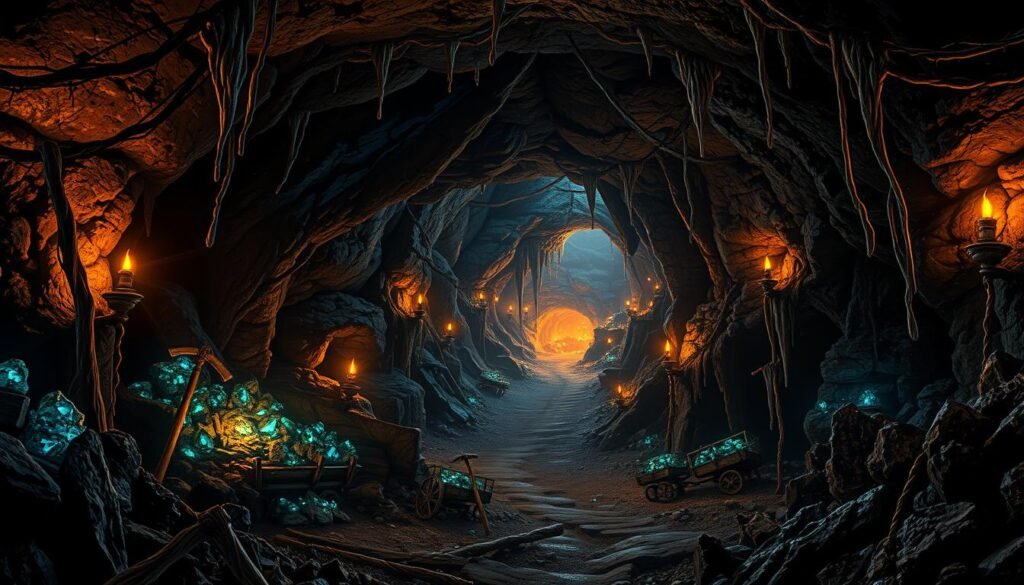
I treat each descent as a checklist: gems collected, key ores saved, and furnaces loaded before bed. This keeps my runs focused and profitable without wasting days wandering aimlessly.
Efficient routes in the Mines for early profit
I plan early mine routes that prioritize visible gem clusters and soft nodes. I sell spare items while holding essential ore for bundles and upgrades.
Short runs aim for quick clearouts and easy exits so I bring goods home with time left for farming or processing.
Deeper runs for Iridium ore and bar production
I wait to enter Skull Cavern until I have food, bombs, and good luck. That is where iridium shows up in volume. I push specific depths and use rings and meals to extend my time on each level.
When I collect iridium, I convert it: the recipe is 5 Iridium Ore + 1 Coal for one iridium bar. Each bar sells for 1,000g (or 1,500g with the Blacksmith profession).
Overnight smelting: convert ore into next-day gold
I drop ore into furnaces before bed so the eight-hour smelt finishes by morning. I keep roughly one furnace per bar I want ready overnight and add more as my ore flow rises.
This routine turns daytime digging into instant morning value and lets me sell bars unless I need them for upgrades.
- I split trips: early gem-focused runs versus deep iridium runs, so each trip has a clear goal.
- I use elevator checkpoints and desert timing in Skull Cavern to skip wasted levels.
- I restock bombs and food in bulk to avoid town runs that cut into mine time.
| Item | Recipe / Source | Sell value |
|---|---|---|
| Iridium Bar | 5 Iridium Ore + 1 Coal | 1,000g (1,500g with Blacksmith) |
| Iridium Ore | Skull Cavern drops | Raw sell varies; better as bars |
| Gems & minerals | Early Mines levels, gem clusters | Solid short-term gold |
“Overnight smelts turn a long day underground into instant profit by morning.”
Crab pots for passive income while you sleep
I place a tight ring of crab pots where I pass each morning so catches pile up without extra trips. This setup frees my days for mining and crops while the pots do the heavy lifting.
Luremaster changes the math: once I pick that profession the pots run without bait. That turns them into true passive income and saves inventory slots and time.
Luremaster synergy and smart placement for reliable returns
I favor ocean spots for variety and value, and I add river tiles when the route is closer to home. I keep a small chest nearby for quick drop-offs and bait backup until Luremaster kicks in.
- I cluster pots along pier edges and tight river runs so one short stop collects everything.
- I decide per catch whether to sell raw or cook; cooked items often increase final value when paired with kegs or jars.
- I expand pots slowly so my loop stays fast and avoids NPC pathing that can block access.
- I collect before 2 AM and sell at night so the gold shows up the next day.
| Placement | Advantage | Action |
|---|---|---|
| Ocean pier | Higher variety, rare items | Cluster pots, collect daily |
| River bend | Close route, quick stops | Place near path, add chest |
| Near farmhouse | Minimal travel | Drop-off and process catch |
I treat crab pots as background revenue that rolls into kegs, jars, and small upgrades. They save me time and provide steady cash while I pursue larger goals in Stardew Valley.
Pick the right professions to boost every sale
I take a few profession choices early that lift nearly every income stream on my farm. Picking the right path at levels changes how crops, jars, kegs, pots, and gems sell. I plan these choices around my main loop so each hour compounds gains.
Farming: Tiller into Artisan
I grab Tiller at level 5 and then Artisan at level 10. Tiller gives +10% crop value, but Artisan flips the math—processed goods sell for +40%.
That single chain turns kegs and jars into profit engines. I pair Artisan with cheese and truffle oil for wide gains.
Fishing and Trapping: Luremaster
I pick Luremaster in the fishing branch so crab pots run without bait. This removes a daily micromanagement step and converts pots into passive income.
Foraging and Mining: Botanist and Gemologist
Botanist guarantees iridium-quality forage, boosting every free item I pick. Gemologist adds +30% gem value when I sell stones from the mine.
Respec when plans change
I check my skill spread and use the Statue of Uncertainty in the Sewers if I need a reset. Respec costs 10,000g and lets me swap tracks when my income mix shifts.
- I map when each level hits so profession bonuses sync with planting and sales.
- I align choices with my loop—fishing, mining, or farming—so play style and bonuses match.
- I track incremental value per item to decide what I process or sell raw.
| Skill branch | Key profession | Impact |
|---|---|---|
| Farming | Tiller → Artisan | +10% crops; +40% processed goods |
| Fishing/Trapping | Luremaster | Crab pots need no bait; passive catches |
| Foraging | Botanist | Guaranteed iridium-quality forage |
| Mining | Gemologist | +30% gem sale value |
Tip: I revisit professions seasonally so no skill sits on the wrong bonus for long. A small respec cost is often worth the higher per-item value and the faster path to bigger goals in stardew valley.
Pigs, truffles, and oil: the Deluxe Barn printing press
I turn a Deluxe Barn and a small herd of pigs into a dependable, low-effort income engine for later years. I usually wait until after the first year cashflow stabilizes before committing to the upgrade and livestock.
Costs, setup, and Auto-Petter for low-effort truffle days
Pigs cost 16,000g each and require a Deluxe Barn. They find truffles daily when they are fed and happy, producing valuable items without constant attention.
I add an Auto-Petter so happiness stays high with minimal work. That lets me spend time mining or fishing while truffles pile up.
Oil Makers and the Artisan profession to maximize value
I funnel every truffle into Oil Makers. A raw truffle sells for 625g, but Truffle Oil sells for 1,065g — and 1,491g with the Artisan profession. That uplift makes the initial barn and pig cost pay back fast.
- I size the herd to match my Oil Maker count so no truffles sit idle.
- I plan grass and a hay reserve so feed is never an issue across the year.
- I place barns near artisan machines to cut walking time and speed processing.
| Item | Requirement | Sell value |
|---|---|---|
| Pig | Deluxe Barn, 16,000g | Finds truffles (625g raw) |
| Truffle Oil | Oil Maker + Truffle | 1,065g (1,491g with Artisan) |
| Auto-Petter | Machine add-on | Reduces daily effort |
“I treat pig oil as a high-value anchor product that funds upgrades and steadies my farm income.”
Tip: I usually expand pigs once kegs and jars are humming. This turns animal items into a steady complement for my farming cycles and long-term growth in stardew valley.
Community Center milestones that unlock more money
Finishing the Community Center opens essential upgrades that change how I plan every season. I aim for bundles that give the Greenhouse early so my crops earn all year without seasonal limits.
I treat each bundle as an investment. I bank items as they drop and turn them in on efficient town loops so progress happens without extra trips that drain my day. That keeps momentum and steady gold flow.
Greenhouse timing and use
I move high-value crops and Coffee Beans into the Greenhouse first. Year-round harvests plus queued sprinklers and artisan machines skyrocket weekly returns.
Bus repair and Skull Cavern access
I rush Bus repair for access to the desert and Skull Cavern. Those runs scale iridium and gems fast when I bring food and bombs and target deeper levels.
- I align farm upgrades with each milestone so new features are useful immediately.
- I keep Mines pushes to level 90 for steady mineral income while prepping desert runs.
- After the Center, I consider Willy’s boat: 200 Hardwood, 5 Battery Packs, 5 Iridium Bars, then 1,000g per trip for Ginger Island access.
| Milestone | Unlock | Immediate benefit |
|---|---|---|
| Community Center | Greenhouse + Bus | Year-round crops; desert access |
| Greenhouse | Year-long planting | Consistent high-value harvests |
| Bus repair | Skull Cavern access | Iridium scaling and deeper gold |
“I tie every milestone back to cash flow—each unlock should immediately boost daily or weekly earnings.”
Conclusion
I close with one core rule: use short, repeatable loops that free energy and compound gains overnight. Early game focus on fishing, foraging, and Help Wanted turns earns gold fast while you save for sprinklers and the Greenhouse.
I avoid wide fields until I can support seeds that match my days grow window. Kegging coffee beans, overnight smelts for iridium bars, and clustered crab pots turn idle time into steady profit.
Lock in professions that lift processed value, keep a tight farm layout, and plan each day like an account ledger. Do this and you will earn money quickly, free up time for villagers and projects, and scale gold every season.
FAQ
How can I maximize income fast in the early game?
I focus on a tight daily loop: forage the beach and forest in the morning, fish at the river mid-day for high-value catches, and grab Help Wanted board tasks for quick gold. I sell low-value items, save high-quality fish and forage for bundles, and use any leftover time in the Mines to pull up gems. That routine keeps cash flowing without overcommitting crops or animals.
What is my go-to plan for the first spring to earn gold quickly?
I split time between forage, fishing, and simple quests. Forage items and spring fish sell well and require no crops. I accept Help Wanted jobs for bonus payouts and Prize Tickets. If I find copper ore or gems, I sell a few but keep enough to craft tools and a few kegs later.
When should I start using crab pots and where should I place them?
I set crab pots as soon as I can afford a few bait stacks. I place them along the beach, the forest pond near the mountain, and the northern lake for steady, passive income. I check them daily; with the Trapper or Luremaster profession I save bait and get better returns.
Which crops give the quickest return on investment early on?
I plant crops with short grow times that fit the season length and compound into artisan goods later. For early seasons I pick crops that mature fast and sell well raw until I can build kegs or preserves jars. I avoid long-growth crops until I can automate watering with sprinklers.
Should I prioritize Speed-Gro or Deluxe Speed-Gro?
I use Speed-Gro when I need quick harvests for a season or to bridge to artisan production. Deluxe Speed-Gro pays off only when the time saved lets me plant an extra full harvest cycle or reach lock-in days for bundles or Festivals. I pick the cheaper option if funds are tight.
How do I turn coffee beans into steady profits?
I secure beans from the Mines or purchase them, then grow enough to feed kegs. I process coffee in kegs for higher value and use the Greenhouse to run coffee year-round. Kegs ramp up profits faster than selling raw beans, especially with the Artisan profession.
What’s the fastest mining route for profit in early levels?
I aim for concentrated staircases: clear to the next ladder quickly, loot crates for ores and gems, and sell low-value stone. I prioritize geodes, copper, and any gem drops. Once I can reach Skull Cavern, I switch to focused runs for iridium.
How should I approach Skull Cavern for iridium ore and bars?
I take bombs, food with defense boosts, and staircases or ladders to push deep quickly. I break rocks with ladders when safe and mine every iridium node. I smelt ore overnight into bars so I wake up with sellable high-value output or enough bars for tool upgrades.
Which professions should I pick to increase sale value across activities?
I usually pick Tiller into Artisan on the farming line to boost processed goods by 40%. For fishing, I take Luremaster to improve crab pot efficiency. Foraging and mining choices like Botanist and Gemologist give guaranteed higher-quality finds. If I need to change, I respec at the Statue of Uncertainty.
Are pigs and truffles worth the setup cost?
I view pigs as late-game cash machines. Once I have a Deluxe Barn, Auto-Feeder or Auto-Petter, and room for multiple pigs, truffles generate consistent high-value returns with minimal daily work. Oil makers used with artisan professions further amplify profit from animal products.
How does the Community Center affect my long-term income?
Completing bundles unlocks big value boosts: the Greenhouse for year-round crops and the Bus repair for Skull Cavern access. Those milestones let me avoid seasonal limits and access iridium earlier, and they repay effort many times over through expanded earning options.
What items should I prioritize selling versus saving for processing?
I sell low-value forage and early ores but keep high-quality fish, gems, and crops suited for kegs and preserves jars. Processed goods yield substantially more, so I reserve anything that benefits from artisan professions and sell the rest to fund infrastructure upgrades.
How do I manage time and energy while chasing profit each day?
I plan a compact schedule: morning chores and watering, mid-day mining or fishing, evening selling and social runs. I carry food for energy, upgrade tools on off-days, and avoid overextending to reduce wasted days. Smart planning keeps my gold consistent without burning out.
When should I start building kegs and preserves jars for compounding income?
I begin once I clear basic tool upgrades and have a steady supply of crops or fruit. Kegs pay back quickly on high-value crops like coffee, starfruits, or fruits from the Greenhouse. Jars are cheaper and fine for early preserves, but I scale kegs as soon as I can.



















One Response