


Surprising fact: I found a tween who earned $100 in tips after storm cleanup and another who charged $10 per car for detailing — real examples that show small efforts add up fast.
I created this list from real U.S. family reports so you get practical, proven ideas. My goal is to skip recycled advice and give clear, actionable steps you can try this week.
The guide groups jobs by theme — neighborhood chores, seasonal gigs, crafts, market stalls, digital services, and more. I highlight quick wins, sample pricing, and which options need parent help versus which let older kids work more independently.
Pick two or three ways that match your time and tools. Stack small projects like weekend lemonade and weekday pet walks to earn steady cash while you learn skills and build confidence.
Key Takeaways
- I curated real, practical ideas from U.S. families.
- Examples include storm cleanup tips and car detailing pay.
- Ideas are grouped by theme for quick choice and action.
- Some tasks need parent help; others suit older kids alone.
- Try two to three ideas this week to learn fast and grow income.
Why I Built This Ultimate Listicle for Kids to Earn Money Right Now
Parents kept telling me they needed fresh, safe projects their children could start this weekend. I wrote this guide to answer that call and remove the guesswork around earning money for young kids.
I collected field-tested examples from families and neighbors. Those reports include simple pricing and real outcomes — slime sold by the scoop, custom cookies at $18–$24 per dozen with $4–$5 in costs, and yard work that earned tips and repeat customers.
- Scan by theme, age-fit, and skill level so you can pick a quick start.
- Mixes of creative and practical options for crafty kids or hands-on helpers.
- Notes for parents on supervision, permissions, and safe local rules.
My goal is practical action. I created short, clear plans so children can test a project over a weekend and learn from small wins. That approach builds confidence and steady work while keeping family schedules manageable.
Understanding Search Intent: How I Help You Find 100 ways to make money as a kid
I split browsing and action so you can move from ideas to income fast. When readers search, sometimes they want general guidance and sometimes they want a plan they can start today.
Informational intent pages in this guide explain what each job involves and who it fits. I add where to start, who to ask for help, and a quick pricing anchor so you know what to charge.
Informational intent vs. taking action today
If you’re researching, read the short notes and pricing examples like $0.75–$3 per square foot for grout cleaning or $16.75/hour for babysitting. Those numbers speed up conversations with neighbors and parents.
How I group ideas so you can pick the best fit fast
- I sort jobs into buckets—services, make-and-sell, digital, and in-person—so you can choose by available time and tools.
- I flag age-friendly options that need parent support and more independent paths for older kids.
- I mark quick Saturday launches versus projects that need a week of prep, and suggest complementary stacks like car wash plus interior vacuuming.
Result: You can skim, pick a fit for your time and community, and take the next step with confidence.
Neighborhood Hustles That Help People and Pay Well
A little planning turns seasonal chores into steady income right on your block. I focus on simple services neighbors need now and in bad weather.
Snow shoveling, leaf raking, and storm cleanup: Set per-visit prices ($10–$25) and leave a polite tip note. After a big storm, two kids I know earned $100 in tips clearing debris in one afternoon. Fast response can boost tips and repeat work.
Car detailing and interior vacuuming: Bundle an exterior wash with interior vacuuming to raise your average ticket. A tween in my area charges $10 per car for a basic detail and books neighbors on weekends.
Recycling cans and bottles: In bottle-bill states (CA, CT, HI, IA, ME, MA, MI, NY, OR, VT) a monthly system can add steady extra cash. One family in California nets about $60 per month from household recycling, split among three kids.
Donation pick-ups and event cleanup: Offer porch pickup days with an envelope or mobile pay option. For parties, propose a flat fee for trash, dishes, and sweeping—quick work that neighbors appreciate.
- Make friendly flyers and do door-to-door intros with a parent present.
- Create a street route to save time and avoid back-and-forth trips.
- Track repeat customers and offer seasonal retainer spots for predictable work.
- Always use safe lifting practices and ask for adult supervision with heavy loads.
Pitching your service clearly and showing up on time makes neighbors trust you—and keeps steady work flowing.
Seasonal Classics That Still Work: Lemonade Stand and Holiday Spinoffs
Short-run stands and holiday services give kids a way to learn profit, stock, and customer care. I focus on simple upgrades and clear pitches so you can start this weekend.
Lemonade upgrades and hot cocoa pop-ups
I recommend a small menu: classic drinks plus one snack. Bundle deals like “buy three, get one free” and mobile pay raise sales on busy days.
Hot chocolate stands often outperform lemonade in cold months, especially near parks and community events.
Holiday setup, egg hunts, and pitching parents
Offer three packages—basic, plus, premium—with set prices and timelines. Busy parents and seniors often pay for setup and takedown work.
I also contact local organizers to help hide eggs, run games, and clean up for a flat rate. These gigs teach scheduling and service pricing.
- Choose high-foot-traffic corners with permission.
- Keep a checklist: change box, signage, cups, gloves, trash bags, and a restock plan.
- Track costs per cup so you know profit and can adjust prices fast.
Pet Care Wins: Dog Walking and Beyond
I started with one neighbor’s pup and learned fast that pet owners value consistency and photo updates. Pet work fits short after-school blocks and can help kids earn steady cash while building trust.
Dog walking, pet sitting, and adventure outings
I offer timed blocks: 30 / 45 / 60 minutes and add a small surcharge for extra dogs. Adventure outings include trail time or park free play and often command higher rates. Use a simple intake form for feeding, leash behavior, and any friend dogs the client prefers to meet.
Grooming basics and safe add-ons
Stick to brushing, gentle baths, and paw care. Avoid nail clipping unless trained; instead sell nail-safe add-ons like paw balm. Always confirm yard fences and leash rules before starting.
Treats, shampoo bars, pricing, and referrals
Make small-batch treats, print ingredient lists, and sell in simple bags at parks. Dog shampoo bars are a craft item (adult help may be needed for lye). Text photo updates to owners and gather testimonials so friends and neighbors refer you.
- Schedule walking loops to meet multiple clients efficiently.
- Price by time, add for extra dogs, and offer repeat-booking discounts.
- Carry waste bags, water in summer, and confirm introductions first.
Pet sitting and dog walking is a growing market (projected at $20.1B by 2025). Reliable service gets repeat business — and it helps you earn money while learning customer care. Learn more about starting this kind of local service here.
Yard, Home, and Handy Services Kids Can Offer
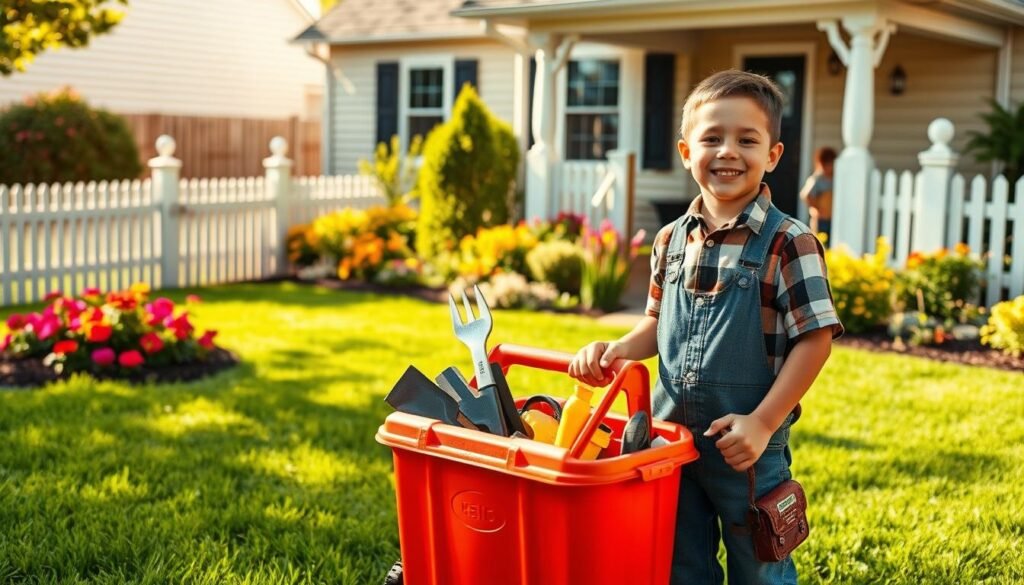
I mapped simple yard and home tasks that let kids quote a fair price and start this weekend.
Lawn mowing, weeding, aeration, and watering
I break down a yard-care menu—mowing, weeding, aeration, and watering—so you can quote per lawn or by the hour.
Batch nearby houses on the same day to save travel time and boost your hourly rate. A seasonal checklist flyer makes it easy for neighbors to circle what they want and text you back.
Window washing, tile grout cleaning, and furniture refresh
Sell a window package for inside and outside panes and schedule it before events for people who need fast results.
Grout cleaning usually pays $0.75–$3 per sq ft; do a small test patch first to set expectations. Offer a furniture refresh—vacuum, spot-clean, and lint-roll sofas—targeting pet owners and guests-ready homes.
Gutters, screen swaps, and car washes
Gutter cleaning needs a sturdy ladder, gloves, and neat debris bagging. Safety matters—always ask an adult for help with high ladders.
Offer quick screen protector replacements for $10–$15 using low-cost protectors. Pair an exterior car wash with interior vacuuming and mat shake-outs to earn extra per vehicle.
- Take before-and-after photos to build a portfolio for repeat and referral business.
- Present a clear price sheet and use short appointment windows so neighbors trust your work.
School Market Day, Fairs, and Farmers Markets: Make and Sell
Selling at school markets and farmers markets teaches scheduling, pricing, and how to read customers fast. I focus on low-cost recipes and neat packaging so children can sell on busy days and parents can keep the schedule simple.
Frozen cookie dough subscriptions: Offer 6 balls for $16 or 12 for $32 delivered monthly. I include simple labels and a short delivery route so the family can handle drop-offs on one afternoon.
Decorated cookies and cookie bars
Decorated cookies often sell for $18–$24 per dozen with $4–$5 costs. Buy butter and meringue powder in bulk and set a specialty surcharge for gluten-free or natural dyes.
Foot-long cookie bars baked in a 9×13 pan make impulse buys. Cut into 1-foot strips, wrap in clear sleeves, and add a price tag for easy sales.
Small crafts and bath items
Pressed-flower bookmarks cost about $0.25 each and sell near $3. Bath salts at $4/100g typically yield ~$2.50 profit with tidy jars and ingredient labels.
Make notepads in Canva, add reusable straw charms, stickers, and simple first-aid car kits for varied price points that appeal to fair shoppers.
Slime, toppings, and checkout
Slime by the scoop attracts kids—price at $0.25–$1 per scoop and offer mix-ins. Pre-sell with order forms in parent groups so you can predict inventory and cut waste.
- Pack: price cards, sample display, wipes, bags, and a tip jar.
- Signage: list ingredients and allergens and state mobile payment options for farmers markets.
- Follow-up: ask for testimonials and take photos to post before the next market.
Crafts and Homemade Goods That Kids Make and Neighbors Buy
Craft projects sell fast when they solve a small problem or delight a neighbor. I focus on simple, repeatable items that you can price clearly and stock quickly.
Handmade jewelry, candles, soaps, and mood-ring surprise eggs
I explain how to price jewelry and candles for small-batch runs: add materials, time, and a 2x markup. Source beads and wax in bulk so your profit stays healthy and you can make sell choices that scale.
For mood-ring surprise eggs, buy bulk rings and use safe clay or dough. Pack each with an ingredient card and a tiny story tag to boost perceived value.
Gourmet s’mores kits and glitter cocoa bombs
Gourmet s’mores kits sell well at campgrounds and weekend markets. Pitch split-profit displays to campground shops and ask neighbors for pre-orders for pickup days.
Glitter cocoa bombs are a seasonal hit and can bring in good money if you use sturdy packaging and bubble-wrap molds.
Polished rocks, 3D prints, and blind date books
Tumble rocks, sort by color, and sell sets with info cards. Use a library’s 3D-print allowance to build inventory of small toys at near-zero filament cost.
Wrap thrift paperbacks as “blind date books” with a short genre hint and price tag. These small items help me and other kids make products that neighbors notice and the broader community shares.
Note the rise in teen sellers on Etsy — that trend shows a real demand and helps a young money kid find buyers beyond the block.
Digital and Online Ideas: From Roblox Items to YouTube

From Roblox creations to downloadable art, the internet opens practical earning paths for young creators.
Create and sell Roblox items
I explain how to set up Roblox Studio with a premium account, build simple accessories, and list them for Robux. Parents should manage the account and payouts.
Safety note: keep chats off, don’t share personal info, and test items with a trusted adult before selling.
Design phone lock screens and stickers in Canva
Children can design lock screens, export PNGs, and sell downloads on a parent-managed shop. Use clear previews and simple license notes.
Start a YouTube or Instagram channel
Pick a niche, edit short clips, and post regularly. Repurpose games clips into tutorials, highlights, and funny fails to grow views.
Monetization needs time; build a portfolio and use a parent email for brand inquiries and payments.
Surveys, micro-gigs, and a simple schedule
Teens 13+ can try Swagbucks and those 14+ can use LifePoints for surveys. Try small gigs like caption writing or basic design tweaks for local creators.
- Weekly plan: 1 content idea, 2 short edits, 1 outreach message, 1 survey or micro-gig test.
Guardrails: use parent accounts for payouts, never share home details, and limit screen time so school stays first. These steps help kids earn online while staying safe.
Flipping, Reselling, and Micro-Enterprises
Flipping small finds and building micro-enterprises taught me how a few smart buys turn into reliable cash.
Customized toys on eBay is one of my favorite starts. I source undervalued figures at thrift stores, clean and photograph them well, sometimes 3D print missing parts, then list with clear titles. One teen I know earned $1,200–$1,500 doing this.
Restoration, books, and small lots
Sneaker restoration is learnable: cleaning, repainting, and touch-ups appeal to collectors. Book reselling works from garage sales and library clearances—grade condition, use ISBNs, and list with sharp photos.
Bundles, events, and garage-sale strategy
Gather empty TP rolls from neighbors monthly and sell in craft lots for $2.99–$19.99 per 200. Bundle firewood with kindling and a starter for campers. At events, selling glow sticks bought in bulk can boost margins quickly.
“I started small—one toy, one pair of shoes—and tracked every cost. That bookkeeping showed me what flips were worth repeating.”
| Item | Typical Cost | Resale Range |
|---|---|---|
| Customized toy (clean + part) | $2–$8 | $15–$60 |
| Sneaker restoration | $5–$25 (materials) | $40–$200 |
| TP roll lot (200) | Free–$5 (collection) | $2.99–$19.99 |
| Firewood bundle | $3–$8 | $8–$25 |
- Promote an upcoming garage sale with clear categories and “fill a bag” deals near the end.
- Use a small lemonade stand add-on to draw foot traffic and showcase flips to neighbors.
- Keep simple bookkeeping: cost, fees, shipping, and net profit per item so you can grow into a weekly sourcing routine.
In Real Life Jobs for Kids and Teens in the U.S.
Hands-on roles like orchard picking and event setup build work habits and strong references. These jobs teach responsibility and give you real paychecks while you learn how local hiring works.
Local farms, orchards, and stables (seasonal, non-hazardous)
Ask about picking, stand sales, and cleanup shifts during harvest and hay season. Say you want non-hazardous tasks and offer to help with setup or sales.
Mucking stalls is common at stables and makes a great weekend job for animal-loving teens.
Community centers, camps, lifeguarding, and event setup
Rec centers and summer camps hire helpers and counselors. Lifeguarding requires training and a certification; many pools hire teens 15–16 years old and up.
Event setup crews and community festivals need short-term staff and give good references.
Working in family businesses (with parental guidance)
Helping at a family business teaches customer service and safe operations. I recommend a trial shift so you learn tasks quickly and show reliability.
- Common entry jobs: grocery clerk, movie usher, ice cream assistant — great for a first résumé.
- Check age minimums and local rules before applying.
- Babysitting pays around $16.75/hour and helps set your rate expectations.
Find a mentor, ask for short trials, and treat each shift like an interview. These simple ways build skills, references, and steady income in your local community.
Tech-Savvy Services Kids Can Offer (Even to Seniors)

Helping someone set up a new phone or fix Wi‑Fi builds trust and pays quickly. I started with simple visits and a short checklist. That clear process made neighbors comfortable and led to repeat requests.
Basic device setup and safe troubleshooting
I offer services like app installs, router checks, and plain‑language guides for seniors. I explain passwords, suggest a password manager (with a parent present), and leave a one‑page instruction sheet.
Design, quick photo shoots, and light editing
I create simple logos, social post graphics, and one‑page flyers. For photos, I shoot family or pet portraits, do light edits, and deliver digital files within 48 hours.
- Small business packages: four social posts + one monthly photo refresh.
- Use a short intake form and a mini tutorial library so clients feel supported.
- Pair with a friend—one handles tech, one manages scheduling and follow-up.
Freelance earnings grew 11.8% in 2022, so building a tiny portfolio helps you charge fairly. Document every change, leave a written guide, and call for a 10‑minute follow-up. Kindness and patience matter most when helping people learn.
Tutoring, Lessons, and Creative Classes I Can Lead
I found that a short, friendly lesson can turn a hobby into reliable after-school work. I start small, prove results, then expand into subject tutoring or music lessons when I feel ready.
Homework help and music lessons
I offer homework help for elementary and middle school topics and 30-minute beginner music sessions. For music, I prepare short exercises and a practice log I share with parents.
Craft classes for younger kids
Mini arts sessions run in small groups with supply kits and one take-home project. I include a simple safety note and ask a parent to stay nearby.
“Start with one client, track progress, and offer a 4-session pack for steady bookings.”
- 4-session bundles, sibling discounts, and referral bonuses help growth.
- Use flyers for local parents and a quick feedback form after the first class.
- Keep start/end times and cancellation rules clear so the operation feels professional.
| Service | Length | Typical Price |
|---|---|---|
| Homework help | 45 minutes | $15–$25 per session |
| Beginner music lesson | 30 minutes | $12–$20 per lesson |
| Arts & crafts mini-class | 60 minutes | $10–$18 (includes supplies) |
Mini Business Blueprints: From Pricing to Delivery
I mapped costs and routes, and my cookie side hustle stopped feeling like guessing and started earning steady cash.
How I price materials vs. profit on baked goods
I list ingredient costs first: flour, butter, sugar, and packaging. Decorated cookies sell for $18–$24 per dozen with about $4–$5 in expense per dozen.
I track time and packaging in a simple spreadsheet so I know true profit per dozen. That helps me decide when to buy bulk supplies and when to raise prices slowly as demand grows.
Delivery options: bike routes, porch pickup, and schedules
I choose delivery by distance: bike for nearby streets, porch pickup with a two-hour window, and weekly subscription drops ($16 or $32 plans) for steady orders.
- Set a minimum order so your time is worth it.
- Use order forms, small deposits, and reminder texts to cut no-shows.
- Have a “sold out” plan so quality stays high and you don’t overbook.
“A clear price and a predictable pick-up time made neighbors order more often.”
Safety, Permission, and Local Rules I Always Check First

Checking rules early saves time, keeps neighbors happy, and protects my work. Before I set a date I loop in an adult and confirm who’s allowed on the property and what permits I need.
Parental supervision, neighborhood permissions, and event approvals
I always tell my parents the plan and get written approval for stands or door-to-door offers. Ask HOAs, property owners, or event organizers for permission in writing so you have a record.
Selling food and crafts: what to ask before I sell
Check local cottage food rules and market policies before selling baked goods. Some online platforms require ages (Swagbucks 13+, LifePoints 14+), so have an adult manage accounts and payouts for children.
- Stick to neighborhoods and events where you are allowed.
- Use safe tools, a buddy system, and avoid roofs or high ladders.
- Keep customer data private and use a parent-managed contact.
- Log receipts and have a simple incident plan: who to call and what to stop doing.
Respecting community rules keeps your reputation strong and helps steady services and future money opportunities.
Smart Money Moves: How I Manage, Save, and Give
I started treating each dollar like a tiny job: save some, spend some, give some, and track the rest. That simple rule helped me turn chores and small gigs into real progress without feeling overwhelmed.
Setting up a simple budget: save, spend, give
I use three clear jars and an app category. Every dollar I earn goes into one of these buckets so I see progress fast.
Save: long-term goals like camp or a laptop.
Spend: small treats and supplies that keep me motivated.
Give: small donations to causes I care about. This feels good and teaches priorities.
Using a savings account and tracking goals over time
About 81% of parents want their children to learn financial skills, and research shows early habits help later decisions (FINRA Foundation, 2020). I opened a youth savings account with a parent and watch interest add up.
- I set short-term goals (new game or bike part) and long-term goals (camp). I mark milestones and celebrate.
- Weekly money check-ins with my parent log income, spending, and extra cash set aside for giving.
- I keep a simple ledger so I can see how kids earn from different tasks and choose the best ones to repeat.
“Treat each dollar like a tiny job and you’ll learn what pays off — and what doesn’t.”
Inspiring Real-World Wins From Kids My Age
I collect short, real success stories that show how tiny projects grew into steady paychecks.
I highlight a 14-year-old cookie decorator who turned weekend classes into paid orders. She priced custom cookies at $18–$24 per dozen, built consistent branding, and booked local events.
Teen sellers are on the rise: Etsy saw a 77% increase in teen shops between 2020 and 2021. That growth shows how hobbies can become legit online stores with repeat customers.
Young author and lemonade stand cross-sell
A 7-year-old used AI and parent help to self-publish on KDP and earned about $300 over two years. He also sold copies beside a lemonade stand for extra visibility.
From family garage table to store shelves
Gabrielle “Gabby” Goodwin began at age seven with handcrafted bows. With family support, her GaBBY Bows later reached 74 Target stores — proof that a simple idea can scale.
- I point to friends who started at craft tables, added custom orders, and kept repeat buyers season after season.
- Early wins like a school market sellout often spark simple websites or online pages for repeat sales.
- Make a “wins board” with photos of stands, fairs, and happy customers to keep momentum.
“Every success here began with one small test weekend and the courage to learn in public.”
| Example | Start | Outcome |
|---|---|---|
| Cookie decorator | Weekend classes | $18–$24/dozen, paid orders |
| Teen Etsy sellers | Hobby shops | 77% growth (2020–2021), repeat buyers |
| Young author | KDP + lemonade stand | ~$300 sales over 2 years |
| GaBBY Bows | Handmade at home | Products in 74 Target stores |
Remember: family and neighbors often become your first champions. Share your journey with friends and support their experiments — your story can help them start.
Conclusion
This short checklist sums the best parts and gives clear next steps so you can choose the right ways and start this week.
I recommend picking two or three ideas, messaging neighbors or friends, and setting a firm start date on your calendar. For many kids, bundling services—like a car wash plus interior vacuum—raises the average ticket and speeds results.
Confirm permissions, keep a parent in the loop, and follow simple safety steps. Track hours and receipts so you learn which jobs help you earn money and which fit your schedule best.
Set a save/spend/give plan before your first sale and ask happy customers for referrals. Start small, stay kind, and show up—your best opportunities grow from doing the work well.
FAQ
How old do I need to be to start earning extra cash around my neighborhood?
I started simple tasks like dog walking and lawn raking at about 10, but rules vary. For paid gigs that involve handling money or platforms, parents usually need to set up accounts or give permission until you’re 13–16. I always ask a parent first and check local rules for youth work and safety.
What low-cost items can I sell at a school market or farmers market?
I focus on things with cheap supplies and big appeal: decorated cookies, pressed-flower bookmarks, small jewelry, and bath salts. I package each item neatly, price for materials plus profit, and bring a few extras like stickers or sampler packs to boost sales.
Can I offer digital services if I’m under 18?
Yes. I create Roblox items, design phone lock screens with Canva, and edit photos for neighbors. For platforms that require accounts, a parent or guardian often needs to sign up. I stick to age-appropriate gigs and always get permission before sharing personal info online.
How should I set prices for baked goods or handmade crafts?
I add up ingredient and supply costs, then double for labor and overhead as a start. If similar items sell locally for more, I adjust. I also offer bundle discounts and clearly label prices so customers know they’re getting value.
What are safe pet-care tasks I can do for neighbors?
I walk dogs, feed pets, brush coats, and offer short pet-sitting check-ins. I don’t do medical care or use harsh grooming tools. I get clear instructions from owners, confirm vaccination records, and carry emergency contact info whenever I watch an animal.
How can I advertise my services without spending much money?
I make simple flyers, post in community Facebook groups with parental approval, and use word-of-mouth. Leaving business cards at local stores, texting neighbors, and asking satisfied customers for referrals works great and costs little.
Are there seasonal ideas that pay better than others?
Definitely. Snow shoveling and holiday decoration setup bring good tips in winter. Lawn mowing, leaf raking, and event cleanup peak in spring and fall. I plan my calendar around seasons to maximize income and demand.
What safety and permission steps should I follow before starting a job?
I always get parental supervision for unfamiliar tasks, ask neighbors for written instructions when needed, and check local ordinances about selling food or door-to-door services. For public events, I confirm permits and rules with organizers.
How do I manage the money I earn from small jobs?
I split income into three jars or accounts: save, spend, and give. I track earnings in a simple notebook or spreadsheet and set short-term goals like saving for a bike or longer-term goals like a laptop. Using a teen savings account helps me earn interest and learn banking basics.
What supplies should I have on hand for yard and home services?
I keep gloves, a sturdy rake, hand pruners, a push broom, a bucket, cleaning cloths, and a basic car-washing kit. For safety I add sunscreen, water, and a first-aid kit. I ask about special tools before accepting a job that needs power equipment.
Can I sell food like lemonade, cookies, or hot chocolate at a stand?
Yes, but rules vary. I check local health department guidelines and get parental help for permits if required. I label allergens, serve in clean containers, and keep everything hygienic. Seasonal twists like hot chocolate in winter help attract customers.
How do I handle payment methods customers prefer?
I accept cash and use a parent-approved mobile payment option like Venmo or Cash App for older teens. For small market days, I price items for easy cash change. I also learn to provide receipts and track each sale for my records.
What are beginner-friendly flipping and reselling ideas?
I look for thrift-store toys to clean and resell, vintage books, or lightly worn sneakers I can refresh. Garage-sale finds and online local marketplaces let me test what sells without big upfront costs. I photograph items well and write honest descriptions.
How can I offer tech help to neighbors who aren’t tech-savvy?
I help set up devices, transfer photos, teach simple smartphone functions, and install safe apps. I explain steps clearly, stay patient, and avoid accessing personal accounts without permission. Charging a small hourly rate and offering follow-up support builds trust.
What should I do if a customer cancels or isn’t happy?
I stay calm, listen to the concern, and offer to fix the issue or provide a refund if needed. Clear communication and a polite attitude usually resolve problems. I learn from feedback and update how I work to prevent repeats.
How do I grow a small business into something bigger over time?
I reinvest profits into better supplies, learn basic marketing, and expand services slowly. Creating a simple schedule, asking for repeat customers, and trying new products at markets helped me scale. Parental guidance and legal steps come next as I get older.