


Surprising stat: this Swedish fintech serves over 150 million active consumers and processes more than two million transactions every day.
I write this to show why the core payment experience can feel free to shoppers while the business earns elsewhere. I introduce the main payment options: Pay in 4, Pay in 30, and financing up to 36 months.
From merchant commissions to interest, late fees, interchange, and app advertising, the company mixes revenue streams to stay afloat. I will walk through the practical mechanics: who pays, where fees appear, and why retailers adopt these solutions.
Key Takeaways
- I will explain the klarna business model step by step.
- Consumers see fast checkout, but merchants and financing carry most costs.
- Revenue comes from commissions, interest-bearing loans, and in-app ads.
- The company scaled quickly: global reach and billions in funding.
- Examples from U.S. retailers will make this practical for readers.
Why I’m Breaking Down Klarna’s Business Model Today
I’ll explain the commercial model behind a popular checkout option that retailers pay for to lift sales.
Why this matters now: BNPL is embedded across U.S. ecommerce and in‑store checkout. It touches mainstream customers and a wide set of retailers, changing conversion dynamics and shopper choice.
I want to give practical information founders and marketers can use. You’ll see concrete numbers and clear flows: who gets paid up front, where fees appear, and why merchants accept the cost.
Retail partners get paid immediately while the provider collects from shoppers over time. Merchants often accept the fee because results can be dramatic—orders can rise by about 44% and average order value by roughly 68%, per cited merchant outcomes.
My goal is to separate signal from noise. I’ll highlight the core revenue lines and the role of technology in eligibility checks, instant decisions, and smooth repayments.
Later sections will break down risks, regulation, and unit economics so you can evaluate similar services for your own business. This is not financial advice, but it is actionable context.
- Alignment: merchants gain conversion and bigger baskets; customers gain flexibility.
- Focus: I’ll show which fees move the needle and which are ancillary.
- Preview: upcoming sections cover checkout mechanics, revenue streams, and regulation.
The BNPL Landscape in the United States Right Now
The U.S. BNPL scene has reshaped checkout expectations for both buyers and sellers. I’ll define what this means for everyday shopping and for the merchants that adopt these services.
What Buy Now, Pay Later means for shoppers and merchants
Buy Now, Pay Later lets consumers split purchases into installments or delay payment for 30 days, often with no interest if they pay on time.
Retailers such as H&M, Nike, Sephora, IKEA, and ASOS commonly offer this option at checkout.
Why BNPL surged with e-commerce growth
Adoption rose as online shopping and mobile checkouts grew. Instant approvals, simple plan selection, and fewer upfront costs made the option attractive.
BNPL platforms act as intermediaries: they pay merchants upfront and collect from buyers later. That model reduces cart abandonment and boosts conversion and average order value.
- For shoppers: transparent schedules and reminders help manage cash flow without revolving credit.
- For merchants: the trade-off is paying fees in exchange for higher sales and repeat customers.
- Competition among platforms has driven product innovation and better user experiences across the market.
What Klarna Is and How It Stands Out
My goal here is to show the distinct product mix that makes the app both a payment tool and a shopping hub. I’ll summarize the core services and the choices consumers see at checkout.
Key features to know
- Pay in 4: four installments, with the first payment often due at checkout. This option is usually interest‑free when paid on time.
- Pay in 30: a short trial window that lets buyers receive goods and pay within 30 days with no interest if on schedule.
- Long‑term financing: plans up to 36 months. These can carry APR, so interest may apply for larger purchases.
Scale and product positioning
The company serves over 150M consumers, works with 500,000+ retailers, and handles 2M+ transactions daily. That scale shapes merchant deals and integration choices.
“Installment options give predictable payment paths for buyers and clearer economics for sellers.”
I’ll follow this with a closer look at checkout mechanics and the fee dynamics that drive the business model.
How Klarna Works at Checkout
A single tap at checkout triggers an instant workflow: eligibility, funding, and a record in the app. I’ll walk through each step so you can see who pays, who gets paid, and where the risk sits.
Instant approvals with soft credit checks
Most short-term plans use a soft credit check. That quick check gives approval without affecting a buyer’s credit score.
For longer financing, a hard credit check may be required and happens before the plan is finalized.
Settlement to merchants upfront and the platform’s risk
After approval, the platform remits funds to merchants upfront, minus fees. This looks like a normal card settlement to the retailer.
I note that this shifts credit risk off the merchant and onto the provider, which prices that risk into fees and underwriting.
Returns, refunds, and plan adjustments in the app
Purchase and repayment information lives in the app. A customer can track due dates, swap payment methods, or request a reschedule when eligible.
Returns and partial refunds flow through the platform to adjust remaining installments or cancel the balance.
“The in-app controls and reminders cut missed payments and make post-sale changes straightforward.”
| Step | Action | Who is paid |
|---|---|---|
| Approval | Soft credit check for short plans | Buyer approved instantly |
| Funding | Platform pays merchant upfront | Merchants receive settlement |
| Repayment | Customer pays over time via app | Platform collects |
| Returns | Refunds adjust schedule automatically | Balances updated in app |
- Quick decisions: soft checks speed approval for most customers.
- Retail payout: merchants see near-standard settlement timing.
- Post-sale controls: the app holds information and tools for changes.
How does Klarna make money
This section separates the core profit centers from the smaller, supporting income streams behind the product.
Core revenue streams vs. ancillary income
I break the model into five main revenue streams: merchant commissions, interest on long-term financing, late fees, interchange from card products, and retail media / partner promotions.
Merchant commissions are the largest source. Retailers pay a take rate per sale in exchange for conversion lift and higher average order values.
Interest and late fees appear on longer-term plans or missed payments. Most short-term plans remain interest-free for consumers who pay on time.
Why most shopper experiences feel “free”
Merchants fund much of the short-term consumer benefit through commissions. That lets the app present low-cost or zero-interest options at checkout.
Ancillary income, such as interest earned on cash balances and interchange, helps margins but does not drive the bulk of revenue.
| Revenue stream | Primary source | Why it matters |
|---|---|---|
| Merchant commissions | Retail take rates per transaction | Funds interest-free short plans; scales with volume |
| Financing interest | APR on 6–36 month loans | Higher yield per account; risk priced by underwriting |
| Late fees | Penalties for missed payments | Small but offsets credit losses when applied |
| Interchange & card | Fees from card processing | Steady income from in-store and virtual card use |
| Retail media | In-app ads and promotions | Scales with merchant demand for placement and attribution |
- Pricing varies by plan, market, and borrower risk, which affects margins.
- Underwriting and collections are critical so fee income exceeds credit losses.
- I will dive deeper into merchant fees, APRs, and card economics in the next sections.
Merchant Fees and Commissions: Klarna’s Primary Engine

I’ll focus on the fees retailers pay and why those charges fund the consumer experience.
The basic structure is simple: merchants pay a flat per-transaction fee plus a percentage of the sale. For short plans like Pay in 30 and Pay in 4, that can reach about 5.99% + $0.30. For longer financing, the rate is lower, around 3.29% + $0.30. This applies both online and in-store because the platform assumes the credit risk and handles collections.
Why retailers accept the take rate
Retailers treat the commission as a marketing cost tied to conversion and basket lift. Many report roughly 44% more orders and about 68% higher average order value after enabling the payment option.
Example math on a $200 sale
| Plan type | Rate | Fee on $200 | Merchant net |
|---|---|---|---|
| Pay in 4 / Pay in 30 | 5.99% + $0.30 | $11.98 + $0.30 = $12.28 | $200 – $12.28 = $187.72 |
| Financing (long term) | 3.29% + $0.30 | $6.58 + $0.30 = $6.88 | $200 – $6.88 = $193.12 |
| Notes | Applies online & in-store; final pricing can be negotiated | Category, volume, and risk profile change rates | |
Transaction-level fees also align with revenue recognition at checkout. Merchants get near-immediate settlement while the provider collects from customers over time. That clear split makes the commission easier to justify in accounting and planning.
Closed-loop measurement is critical. Retailers must track incremental sales and repeat behavior to confirm the commission is an effective growth investment for their business.
Financing Interest: Longer Terms That Carry APR
I break down the long-term loan options so you can see when interest applies and what monthly payments look like.
6–36 month plans are aimed at higher-ticket purchases. These plans use fixed monthly payments until the balance is paid in full.
Interest applies on these longer terms. Typical APRs vary by borrower profile and market — many offers sit near ~19.99% while some tiers can reach higher rates, sometimes approaching 29.99%.
When a hard credit check may apply
Longer financing often requires a hard credit check to confirm eligibility. That check affects credit reports, unlike the soft checks used for short-term options.
| Term | APR range | Credit check | Payment type |
|---|---|---|---|
| 6–12 months | ~6%–19.99% | Sometimes hard | Fixed monthly |
| 13–36 months | ~12%–29.99% | Usually hard | Fixed monthly |
| Short-term plans | 0% if on time | Soft | Installments |
Why this matters: the company prices risk into APRs to balance competitiveness and credit losses. I treat these plans like an installment loan, not a revolving line. Review rates and full terms in the app before you commit.
Late Fees: Small but Strategic

Late fees are small in dollar terms, but they play a clear role in keeping accounts current. I view them as behavioral nudges: not a primary revenue driver, but a tool to reduce missed payments and protect overall credit performance.
The company applies charges on missed installments for interest-free plans. Structures vary: some markets use tiered fees tied to order value, while U.S. practice has included set amounts (for example, an $8 fee) after a short grace window.
The app sends reminders and shows clear information to help customers avoid a late penalty. If an account slips, temporary restrictions or limits can apply until the balance is current.
“Small penalties and fast reminders cut delinquency and protect pricing for merchants.”
| Trigger | Typical fee | Timing | Effect |
|---|---|---|---|
| Missed installment | $0–$8 / tiered by order value | After due date + short grace period | Encourages prompt pay; reduces delinquency |
| Repeated misses | Possible account limits | Until account is brought current | Protects credit pool and merchant economics |
| Reminders | No fee | Before due date | Helps customers avoid charges |
Why it matters: modest fees help keep repayment rates healthy. That lowers the risk built into merchant pricing and keeps the short-term BNPL experience effectively fee‑free for most buyers. For readers who want the broader context on the business model, see this business model overview.
Klarna Card and In‑Store Payments
I describe the physical card option and why it matters for in‑store purchases.
The virtual card can be added to Apple Pay or Google Wallet so shoppers can pay at the register with their phone. This turns the app into a true point‑of‑sale tool and keeps the checkout flow familiar for buyers.
Virtual wallet integration and fees
Virtual card basics: the card works like a credit card in wallets and lets customers choose installment plans at checkout.
Monthly card fee: there’s a small monthly charge of about $3.99 after the first year, which adds a direct consumer revenue line.
Where you can use it
Shoppers use the card at major U.S. retailers such as Macy’s, H&M, Saks Fifth Avenue, Sephora, IKEA, Nike, Foot Locker, The North Face, and GameStop.
| Feature | Impact | Example |
|---|---|---|
| Wallet support | Easy adoption at terminals | Apple Pay / Google Wallet |
| Monthly fee | Direct consumer revenue after year one | ~$3.99 / month |
| Settlement model | Platform pays merchants up front | In‑store purchases follow same flow as ecommerce |
“The card extends reach beyond online shopping and feeds data back to underwriting and personalization.”
By linking issuance to the app, shoppers get budgeting, tracking, and plan selection at the point of sale. Broader in‑store use drives more purchases and boosts merchant fee volume while tapping existing wallet infrastructure for smooth adoption.
Interchange and Bank Partnerships

Interchange is a small slice of each card sale that can scale into steady revenue when routed through a program issuer.
At a basic level, retailers pay interchange on card transactions. Issuers and program partners receive that payout, and a portion can flow back to the platform that issued the card.
How interchange fees contribute to revenue
My read: the company offered debit and account services with Visa, which means some interchange—often near ~1% in cited examples—can accrue to the issuing partner.
- Interchange is incremental to merchant commissions and diversifies the business model.
- Levels vary by card type, network rules, and the transaction category.
- Routing transactions through linked cards expands monetization beyond BNPL rails.
The per‑transaction fee is modest, but at scale it strengthens unit economics. I view interchange as a complementary revenue line that boosts margins when the platform issues many cards and drives frequent payment volume.
Advertising and Partner Promotions Inside the Klarna App
I’ll look at the in‑app ad space and why brands value direct links from exposure to purchase.
Within the app, sponsored search results, banner placements, and curated tiles sit between browsing and checkout. These formats let retailers promote seasonal drops or targeted offers to high‑intent shoppers.
Closed‑loop attribution is the key benefit. When a click leads to an in‑app purchase, advertisers can trace the path from ad to sale. That precision turns advertising into accountable spend, not just impressions.
Retail media formats and value
- Search ads surface partner products at the point of intent.
- Banners and curated spots highlight promotions during browsing sessions.
- Personalized placements use payment and browsing signals for better targeting.
| Format | Primary use | Benefit to retailers |
|---|---|---|
| Search results | Product discovery at intent | Higher conversion; measurable ROI |
| Banners & tiles | Promote collections and seasonal sales | Lift in basket size and awareness |
| Curated placements | Personalized offers for segments | Better relevance; improved CPM performance |
| Closed‑loop reporting | Links ad clicks to purchases | Direct sales attribution and optimization |
Why it matters: these solutions diversify the business model by monetizing attention beyond checkout fees. Clear performance data helps retailers justify ad spend and the commissions tied to short‑term payment plans.
“Retail media inside the app turns buyer intent into measurable outcomes, which is priceless for brand budgets.”
The Unit Economics: Who Pays, When, and Why
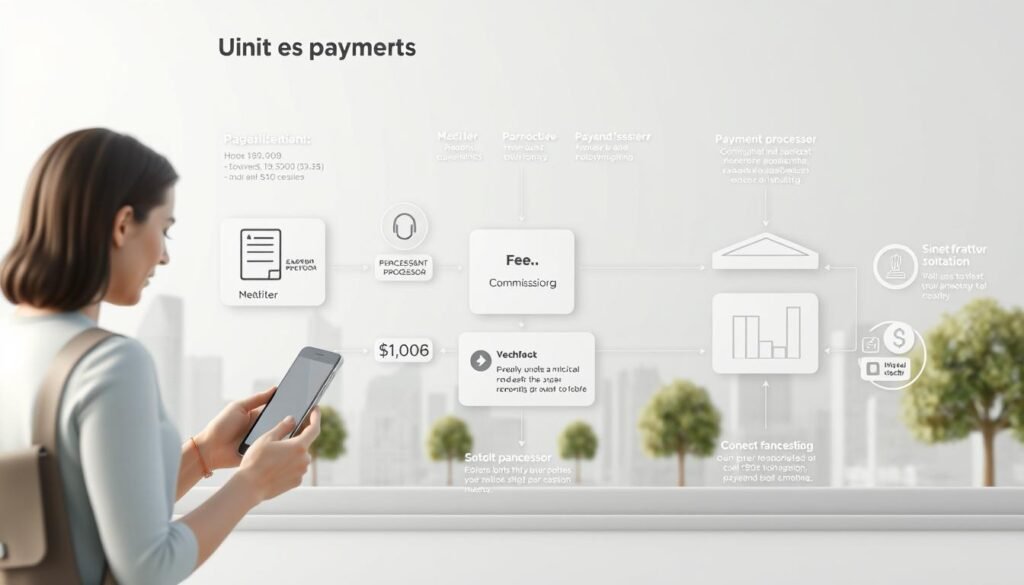
Let’s trace the dollars: who is paid at purchase and who repays over time. I start with the simple flow and then show the levers that tilt profit toward sustainability.
Upfront merchant payout vs. consumer repayment
At checkout merchants receive near‑immediate settlement, net of a commission. The platform books a receivable from the customer and recognizes commission revenue at the time of sale.
The practical effect is clear: retailers get cash and the platform assumes credit risk. Retailers accept the fee because the option typically lifts conversion and average order value.
Balancing conversion gains against credit losses
Unit success depends on conversion uplift exceeding commission costs plus credit losses. A favorable spread between take rates and loss rates supports scalable returns.
Portfolio management matters: underwriting, soft and hard credit checks, limit controls, and targeted approvals keep delinquency in check.
“Reminders, autopay, and a smooth app UX cut missed payments and protect margins.”
| Item | Who benefits | Impact on economics |
|---|---|---|
| Merchant settlement | Merchants | Immediate cash; pays commission |
| Receivable booking | Platform | Assets on balance sheet; credit risk |
| Commission revenue | Platform | Funds short-term plans; scales with volume |
| Credit losses | Platform | Reduces net margin; managed via underwriting |
| Product mix | Platform & customers | Short plans lower risk; long-term financing raises yield and risk |
In 2023, improved credit performance and higher top-line growth helped return the business to quarterly profitability. That shift shows how reducing losses plus volume growth changes the model.
My takeaway: clear information and responsible product design keep the system healthy for merchants and customers. When conversion benefits exceed the combined cost of commissions and credit losses, payments products scale into profitable growth.
Credit Checks, Credit Scores, and Responsible Lending
Understanding credit checks matters when you choose a short plan or longer financing. I want to give clear information so you know which checks affect your record and which do not.
Soft vs. hard pulls and impact on eligibility
Soft pulls are used for most interest‑free options. They let the platform verify identity and basic risk without changing your credit score.
Hard pulls apply for longer loans or higher limits. These formal inquiries can show up on your credit report and may affect your score temporarily.
How responsible usage affects future access
I track repayment history closely. On‑time payments generally increase future limits and unlock more plans for customers.
Missed payments can trigger restrictions, reduced limits, or extra documentation. The service also uses dynamic limits, fraud controls, and identity verification to manage risk.
“Transparent schedules and proactive reminders help customers avoid surprises and maintain access to better options.”
- Check terms in your market before committing.
- Use short plans for predictable cash flow to protect your score.
Klarna by the Numbers: Revenue, Profitability, and Valuation
I’ll summarize recent performance and show why credit discipline shifted outcomes.
Recent revenue growth and the path back to profitability
Q2 2023 revenue reached SEK 6B (~$550M), up roughly 30% year over year. That top-line growth set the stage for improved margins.
By Q3 2023 the company reported a profit of SEK 90M versus a SEK 2.1B loss the prior year. The swing reflected about a 50% reduction in credit losses and roughly 30% revenue growth.
“Reduced credit losses and disciplined cost control drove the return to profit.”
Funding raised and valuation resets
The firm raised about $4.5B across 27 rounds, which shows deep capital backing. Valuation peaked near $45.6B in 2021 and reset to about $6.7B in 2022, mirroring wider fintech repricing.
| Metric | Figure | Why it matters |
|---|---|---|
| Q2 2023 revenue | SEK 6B (~$550M) | Healthy top-line growth |
| Q3 2023 profit | SEK 90M | Profitability from lower losses & cost control |
| Funding | ~$4.5B (27 rounds) | Capital for scale and tech investment |
| Valuation peak / reset | $45.6B → $6.7B | Market repricing and investor focus shift |
My read: investors now prize sustainable economics over pure growth. The underlying business model—merchant fees plus prudent underwriting—benefits when the company invests in technology for better risk decisions and collections.
For more context and detailed metrics, see this Klarna statistics.
Competition and Market Positioning
Competition in BNPL is active, with several firms staking claims across price, product, and partner networks.
I map the main players and note what each emphasizes so you can see why retailers choose one solution over another.
Key competitors and focus
- Affirm: transparency and larger-ticket financing for big purchases.
- Afterpay (Block): strong penetration in fashion and beauty; integrated with Block payments.
- PayPal: wallet ubiquity and Pay in 4 leverage broad consumer reach.
- Sezzle & Zip: consumer-focused options with simple onboarding and retail partnerships.
- Splitit: card-on-file and B2B focus, using existing credit lines for installments.
Klarna’s differentiation among peers
I see the platform win coming from depth: a full spectrum of plans, global scale, and an in‑app shopping hub that combines discovery, retail media, and checkout.
The result for retailers is choice: one partner can supply short installments, 30‑day trials, and multi‑month financing while also offering advertising and analytics.
| Competitor | Notable strength | Retailer fit |
|---|---|---|
| Affirm | Transparent loans, larger-ticket focus | Electronics, furniture |
| Afterpay (Block) | Fashion & beauty reach | Apparel, accessories |
| PayPal | Wallet ubiquity | Mass-market merchants |
| Splitit | B2B & card-first model | Merchants with card portfolios |
| Sezzle / Zip | Easy onboarding; merchant partnerships | Mid-market retail |
“Platform breadth and partner networks often decide which payments solution a retailer enables.”
My takeaway: the company’s multi-revenue approach and integrated services give retailers practical reasons to pick a single partner for both shopping and checkout.
Risks, Regulation, and What’s Next for BNPL in the U.S.
I want to outline the main risks and regulatory shifts that could reshape BNPL offerings in the U.S. I’ll cover credit performance, consumer protection, and the product changes likely to follow.
Credit losses, consumer protection, and macro headwinds
Credit performance matters. The company improved profits after a roughly 50% drop in losses, but a recession could reverse that gain.
Rising funding costs and higher interest rates squeeze margins. Regulators are also focused on clear disclosures, fair lending, and affordability checks for pay later plans.
Consumer protection initiatives will push firms to show full terms, limit punitive late fees, and keep schedules transparent in apps.
Product innovation and new revenue streams
Tighter underwriting and dynamic limits are practical levers to reduce risk while preserving growth. I expect more focus on retail media, card programs, and richer financing features as new revenue lines.
Services that blend advertising, cards, and installment loans diversify income and make the overall model more resilient through cycles.
“Technology investments in data and identity will remain central to performance.”
- Key risks: rising losses, tougher rules, and higher funding costs.
- Consumer priorities: clear terms, fair late-fee policies, and easy-to-read schedules.
- Mitigants: stricter underwriting, dynamic limits, and better risk data.
- Opportunities: growth in retail media, card integration, and value-added payments features.
In short, regulation may raise compliance costs but can also legitimize the space. I think continued investment in technology will decide which firms scale profitably and which struggle to protect margins and revenue.
Conclusion
Conclusion
I’ll wrap up with a concise view of why the klarna business model works when credit is managed tightly and product mix stays balanced.
The core business model centers on merchant commissions, with financing interest, late fees, interchange, and retail media adding depth. That mix lets the platform make money while keeping many short plans fee‑free for shoppers.
Most consumers see smooth payments and simple pay later options. Scale—150M+ users, 500k+ retailers, and 2M+ daily transactions—and a return to profitability show the concept can work.
Retailers gain higher orders and bigger baskets, which often offsets the commission. I believe a diversified product set and clear, responsible terms will keep the company resilient through cycles.
FAQ
What is the basic business model behind Klarna?
I explain it simply: Klarna connects shoppers and retailers by offering payment choices at checkout. Retailers pay fees and commissions for the service, while Klarna takes on the credit risk and collects repayments from consumers. Additional income comes from interest on longer-term financing, interchange from card transactions, late fees, and in-app marketing.
Why am I breaking down this business model today?
I want to clarify how payment options labeled “free” actually get paid for, and to show which parties — merchants, card partners, or consumers — end up covering costs. Understanding revenue streams helps shoppers and merchants decide when BNPL suits their needs.
What does Buy Now, Pay Later mean for shoppers and merchants?
For shoppers, BNPL splits purchases into interest-free or interest-bearing installments, improving affordability. For merchants, it boosts conversion and average order value because consumers face less friction at checkout and can spend more confidently.
Why did BNPL surge with e-commerce growth?
I see two drivers: online shopping demand rose, and consumers wanted flexible payment choices. Retailers added BNPL to reduce cart abandonment. That mix made services like Klarna scale quickly alongside e-commerce expansion.
What is Klarna and what features make it stand out?
Klarna is a fintech payments platform offering Pay in 4, Pay in 30, and longer-term financing. It pairs a smooth checkout UX, an app for managing orders and returns, and merchant integrations that simplify payments across web and mobile.
How big is Klarna right now?
Klarna reports over 150 million consumers globally, partnerships with more than 500,000 retailers, and millions of daily transactions, giving it large scale in the BNPL market.
How does Klarna approve purchases at checkout?
I note Klarna typically uses soft credit checks and real-time underwriting to decide approvals instantly for short-term plans. For longer loans, underwriting can be stricter and may involve more data or hard pulls on credit reports.
How are merchants paid when a shopper uses Klarna?
Klarna usually settles with merchants upfront for approved purchases, assuming the merchant’s payment is guaranteed. That transfers repayment risk to Klarna while the merchant receives quicker cash flow.
What happens to returns and refunds when I use Klarna?
Returns are handled through Klarna’s app and merchant processes. If you return items, Klarna adjusts the payment plan or issues refunds to your original payment method once the merchant confirms the return.
What are Klarna’s core revenue streams?
Merchant fees and commissions are primary. Klarna also earns interest on multi-month loans, interchange and processing fees from card transactions, late fees, and advertising or promotional revenue inside its app.
Why do most shopper experiences feel free?
Short-term plans often carry no interest for consumers, so the cost shifts to merchants and partners. That design makes the service appear free while Klarna recoups value through merchant take rates and other channels.
How do merchant fees typically work?
Merchants pay a mix of a flat fee plus a percentage of each transaction. Rates vary by market, product category, and expected lift in sales. Retailers accept these fees because improved conversion and higher average order values often offset the cost.
What about interest on longer-term plans?
Klarna offers 6–36 month financing with APRs that depend on credit risk and local regulations. These longer products generate interest income, which is a meaningful component of total revenue.
When could a hard credit check occur?
I point out that short Pay in 4 or Pay in 30 options usually use soft pulls. Hard checks more commonly occur for longer-term loans or if a consumer applies for a credit product that requires deeper underwriting.
Does Klarna charge late fees?
Yes, Klarna applies small late fees or penalties in many markets. Fees are typically modest, serving as a behavioral deterrent and a minor revenue source compared with merchant commissions.
What is the Klarna Card and are there fees?
The Klarna Card works like a virtual or physical card tied to your Klarna account, letting you use BNPL in stores. Some card programs have a free period, then a small monthly fee after year one, depending on the region and card product.
Where can I use the Klarna Card?
You can use it at many major U.S. retailers that accept card networks and digital wallets. Acceptance depends on the merchant’s payment setup and whether Klarna’s virtual card is supported at checkout.
How do interchange fees play into Klarna’s revenue?
When Klarna issues a card transaction, interchange fees paid by merchants to card networks generate revenue. Klarna shares this income with issuing banks and uses it to offset costs of payment processing.
Does Klarna make money from advertising?
Yes. Klarna’s app hosts retail media like search listings, banners, and paid placements. Closed-loop attribution helps brands justify spend because they can trace sales back to in-app promotions.
How do the unit economics balance out for Klarna?
Klarna pays merchants upfront, then collects from consumers. The company balances revenue from merchant fees, interest, interchange, and ads against credit losses, fraud, and operational costs to maintain profitability.
How do credit checks and scores affect eligibility?
Soft pulls typically don’t affect credit scores and are used for short-term approvals. Responsible on-time payments can improve future access to higher-value products, while missed payments may trigger harder checks and impact credit history.
What are the current trends in Klarna’s financials and valuation?
Klarna has grown revenue substantially but has faced profitability pressure from credit losses and cost expansion. The company has pursued funding rounds and restructuring to improve margins and return to profitability.
Who are Klarna’s main competitors?
Primary rivals include Affirm, Afterpay (part of Block), PayPal’s Pay in 4, Sezzle, Splitit, and Zip. Klarna differentiates with a broad product suite, strong merchant relationships, and a consumer-focused app experience.
What are the key risks and regulatory issues for BNPL?
Major risks include rising credit losses, consumer protection regulation, and macroeconomic headwinds. Regulators are increasingly focused on disclosure, affordability checks, and fair lending practices for BNPL providers.
What future revenue streams might Klarna pursue?
I expect growth in retail media, subscription services, card products, banking partnerships, and expanded financial services like savings or deposits—each helping diversify revenue beyond merchant take rates.